

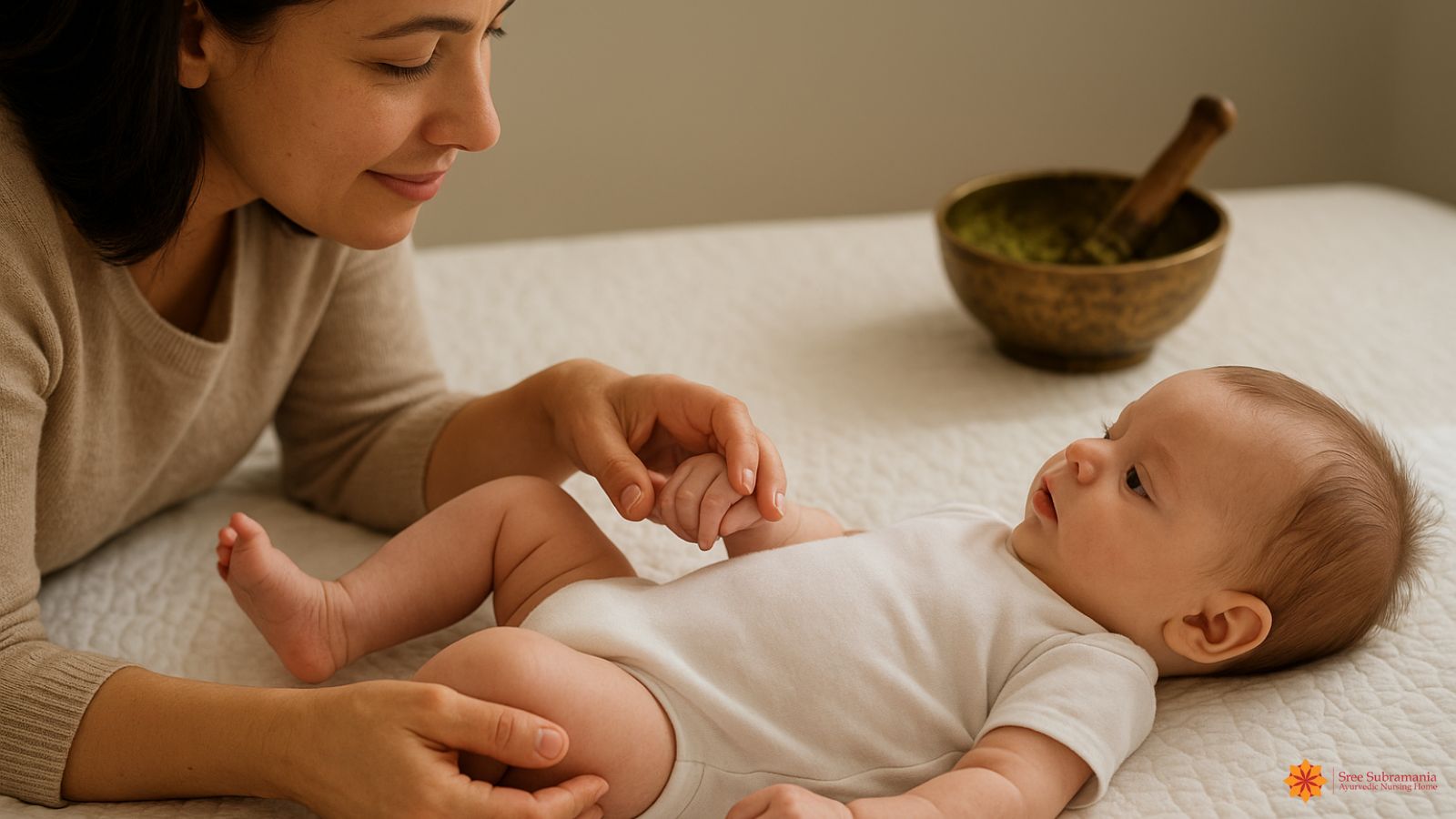
We all know that babies are very close to their parents, especially their mothers. The family Knows best who the baby is closest to. In case of cerebral palsy, each individual may vary based on the severity of the condition and how it affects the nervous system and body functions. Cerebral Palsy also depends on body balance, vision, and speech. Any physical imbalances can be different from person to person.
Any individual, upon becoming a parent, becomes ultimately cautious and vigilant about their child. This is the care they give to their child. Detecting the symptoms and early signs will help each family to deal with things more efficiently and make gradual progress sooner. Sree Subramania Ayurvedic Nursing Home offers the best cerebral palsy treatment in Ayurveda.
What Are the Early Symptoms of Cerebral Palsy?
Symptoms of the cerebral palsy may change according to the brain damage and the responsiveness of the brain still sends messages, either the messages are too strong or the body is too weak, making it hard to obey the commands from the nerves or to hold a position. Sometimes the messages get crossed, making movements a bit unpredictable.
Babies Under 6 Months
- Head Control: It is very common for newborns to not have control of their head for a minimum of three months. It takes about three months for them to gain even slight, steady control. Even at six months, when they start to crawl, they will only lift their heads slightly to see, which shows they are still developing steady head control. Sometimes, babies can find it hard to have control over their heads.
- Stiffness: The body may feel quite rigid and stiff when holding when compared to normal child.
- Floppiness: Babies may act very floppy just like a rag doll. It somewhat makes us feel the baby is missing something in the physique.
- Arching the Back: They often arch their back and neck as if pushing away from you, especially when being held.
- Feeding Challenges: Infants often feel difficulty in swallowing and frequently undergo choking. The babies will be weak in sucking and swallowing.
Babies Over 6 Months (6 -10 Months)
- Delay in Reaching the Milestones: The growth of the baby for 1-year time period occur very fast and the changes are very evident in each months, sometimes it takes time for the babies to reach each milestone. For example, not able to roll over, not able to focus on one direction, no control over the head posture.
- Asymmetrical Movements: They may only reach out with one hand while the other is fisted. Their movements may not be symmetrical on both sides of the body.
- Speech Speculation: All babies are different; each baby starts to speak at a different time. But still, through vigilant observation, an individual can detect the sounds they are making. Some kids may not even make the filler sounds that other babies make. Even a baby’s crying should be paid attention to.
- Hand Movements: The way the finger kept closed always, not able to keep the fingers straight.
Babies over 10 months and older
- Not Sitting Up Straight: After a certain age babies may start doing activities independently, the one who are prone to cerebral palsy cannot sit without support, also not able to sit for a long period of time in the same posture, they tend to stoop easily.
- Scooting: They may drag one side of their body while scooting or use only their arms and not their legs to move.
- W-Sitting: This is a very common sign when the child start sitting. Where the child get comfort in sitting keeping the legs in W shaped. While some children do this, it can be a sign of low trunk muscle tone and is often seen in children with Cerebral Palsy.
How Ayurveda Can Help to Manage Cerebral Palsy?
Cerebral palsy is a neurological disorder that is linked to vata dosha in Ayurveda. Ayurvedic treatments always aim to address the root cause and help improve an individual’s quality of life.
Treating Cerebral Palsy through Ayurveda can help in managing the body components by regulating the functional and nervous system of the body. Ayurvedic methodologies focus on addressing the underlying imbalances to improve the conditions and helping the kids to get on the right track.
Everyone should accept the fact that the Cerebral palsy is non-curable disease as the conditions are autoimmune. From an ayurvedic perspective, Cerebral palsy treatments are Vasti (enema therapy), Abhyanga (oil massage), Swedana (fomentation therapy), Shirodhara (oil drip therapy), and Nasya (nasal administration). Each of these therapies is designed to detoxify the body, restore balance to Vata dosha, and improve neurological functions, thereby potentially improving some symptoms associated with Cerebral Palsy.
Are You Ready to Experience Natural Healing with Ayurveda?
Prevention is better than cure is the proverb you all have been hearing from the very young age.
Although Ayurveda does not promise a complete cure for cerebral palsy, it presents a comprehensive approach that can significantly assist in managing symptoms and slowly refining the basic skills required for daily tasks. It is best to clinically attest the best Ayurveda center. Sree Subramani is not only specialized for cerebral palsy in fact we provide the best Diabetes Treatment in Ayurveda
Sree Subramania offers exclusive natural treatment for diabetes in Kerala. Please contact us or visit our website to know further details.
