

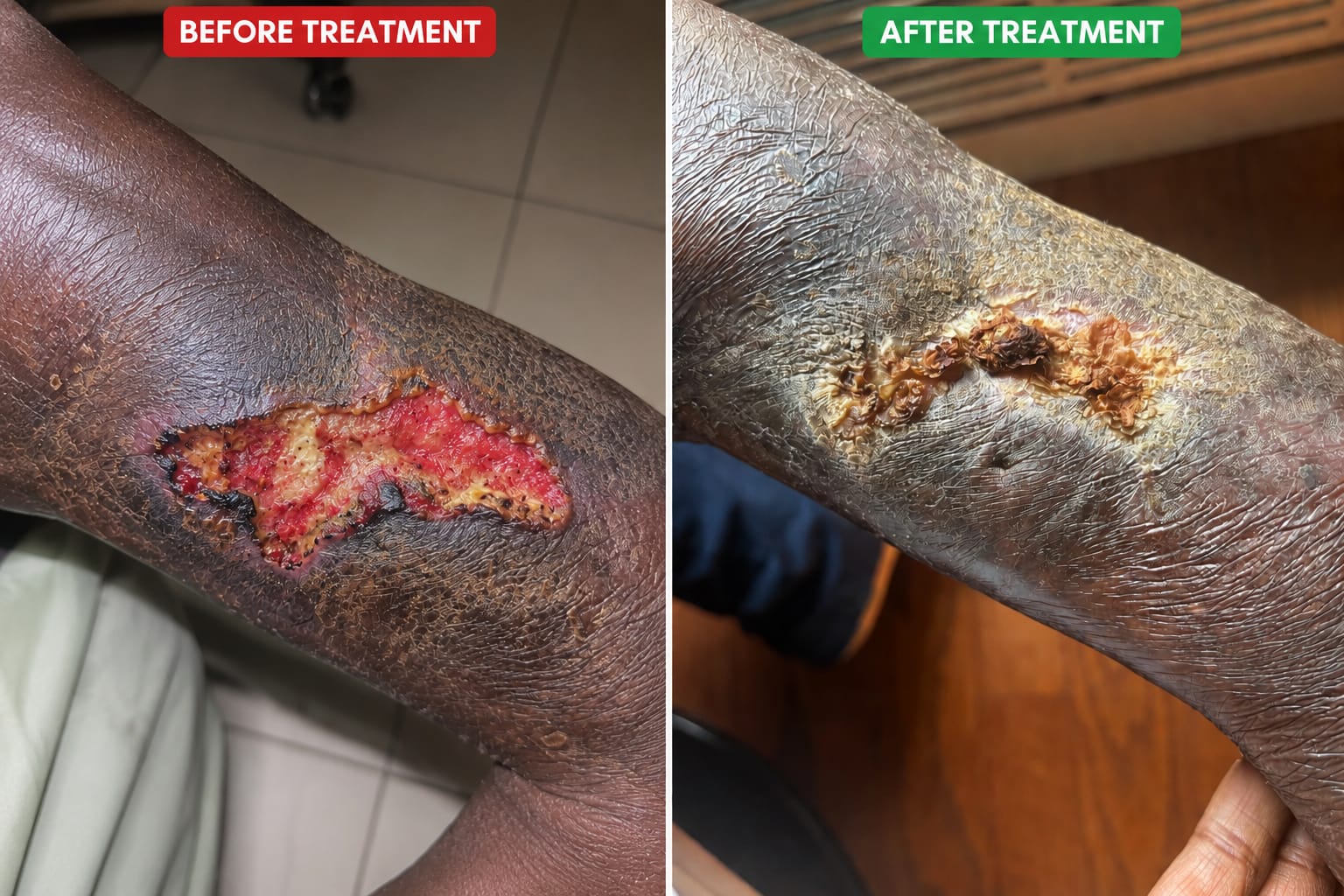
Treated Physician: Dr. Sanand Ratnam, MD(Ayu) CMO, Sree Subramania Ayurvedic Nursing Home
Abstract
Chronic non-healing wounds complicated by infection pose a significant therapeutic challenge, especially in elderly patients. This case study presents a 64-year-old male diagnosed with wound cellulitis associated with Methicillin-resistant Staphylococcus aureus (MRSA) infection. Despite prior conventional treatment, the wound failed to heal. The patient was managed with a comprehensive Ayurvedic protocol, resulting in marked clinical improvement.
Introduction
Chronic infected wounds correlate with Dushta Vrana in Ayurveda, characterized by slough, foul smell, discharge, and delayed healing. Management focuses on Shodhana, Ropana, and Krimighna principles.
Patient Information
• Name: Mani Arunachalam
• Age/Sex: 64/Male
• MRD No: 18141
• DOA: 05/12/2025
• DOD: 13/02/2026
Chief Complaints
• Non-healing wound (right leg)
• Swelling and edema
• Oozing discharge
• Burning sensation
• Warmth and discoloration
History of Present Illness
Progressively worsening ulcer with edema, purulent discharge, foul smell, burning sensation, and delayed healing. Culture confirmed MRSA infection with poor response to antibiotics.
Clinical Examination
• Local warmth (++), tenderness
• Induration and edema
• Pitting edema (right leg)
• Slough-filled wound with irregular edges
• Purulent discharge
Diagnosis
• Modern: Wound cellulitis with MRSA
• Ayurvedic: Dushta Vrana (Kapha-Pitta predominance, Rakta Dushti)
TREATMENT PROTOCOL FOR VARICOSE ULCER
SHODHANA CHIKITSA (PURIFICATION THERAPIES)
• Jaloukavacharana (Leech Therapy) – 3 sittings
• Siravyadha (Bloodletting) – 1 sitting
👉 Purpose: Removes vitiated blood, reduces infection load, improves circulation
EXTERNAL THERAPIES (BAHYA CHIKITSA)
• Dhanyamla Dhara – 23 days
• Kashayadhara (Local) – 45 sessions
• Udvarthanam (Local) – 21 sessions
• Theppu / Lepam – 24 applications
• Annalepa (Navara) – 2 sessions
• Dhoopana (Medicated fumigation) – 14 sessions
• Thudumbaladi Theppu – 4 sessions
• Navarakizhi (Ekangam) – 4 sessions
👉 Purpose: Reduces inflammation, removes slough, enhances local healing
INTERNAL MEDICATIONS (ABHYANTARA CHIKITSA)
• Gugguluthikthakam Kashayam – 60 ml BD
• Guggulu Pachapala Choornam – 1 tsp BD
• Punarnavasavam + Brihat Amrutharishtam – 25 ml BD
• Vajraka Bhasma (101) – 2 pkt BD
• Shubra Sindooram – 1 pkt BD
👉 Purpose: Anti-inflammatory, antimicrobial, improves tissue healing and immunity
LOCAL WOUND MANAGEMENT
• Aragwadhadi Kashayam – wound wash
• Karpooradi Tailam – external application
• Paranthyadi Tailam – right leg application
• Rasothamadi Lepam – left leg application
• Haridradi + Pamanthakam Choornam – external
👉 Purpose: Cleansing, antimicrobial action, promotes granulation
SUPPORTIVE & SOS MEDICATIONS
• Sudarshanam Gutika (SOS) – 2 TID
• Tribhuwan Keerthi Ras (SOS) – 1 BD
• Gudardrakam (SOS for cough)
• Gulgulu Marichadi – external
• Maha Kukkudamamsa Tailam – calf application
• Dhoomathiri – herbal fumigation
👉 Purpose: Symptomatic relief and systemic support
Outcome
• Reduced discharge and foul smell
• Decreased swelling and inflammation
• Healthy granulation tissue formation
• Improved wound contraction
• No active infection signs


Final Conclusion
The present case of chronic wound cellulitis associated with Methicillin-resistant Staphylococcus aureus (MRSA) infection demonstrated significant clinical improvement following comprehensive Ayurvedic management. The patient, who initially presented with persistent oozing, swelling, burning sensation, itching, and delayed wound healing, showed marked recovery over the course of treatment.
By April 26, 2026, there was a remarkable reduction in oozing and discharge, substantial decrease in swelling and local inflammation, and complete relief from itching and burning sensation. The wound exhibited healthy granulation tissue, improved contraction, and progressive healing. Additionally, the patient reported significant improvement in mobility, with better walking ability and reduced discomfort during weight-bearing activities.
This case highlights the effectiveness of Ayurvedic interventions in managing chronic infected wounds, particularly those complicated by resistant organisms like MRSA. The integrative approach of Shodhana, Shamana, and Ropana therapies not only controlled infection but also enhanced tissue regeneration and functional recovery.
Overall, the outcome indicates that Ayurvedic management can provide a safe, effective, and holistic solution for chronic non-healing wounds, significantly improving both clinical parameters and quality of life.
