


Patient Details
- Name: Mr. Syed Khaja Moinuddin
- Age: 40 Years
- Sex: Male
- Treated By: Dr. T. Sanand Ratnam
Chief Medical Officer (CMO)
Sree Subramania Ayurvedic Nursing Home
Introduction
Mr. Syed Khaja Moinuddin, a 40-year-old, experienced gradually worsening neck painthat progressed from mild stiffness to chronic discomfort. The pain radiated to both upper limbswith numbness and tingling, restricting his daily activities and neck movements.
An MRI in May 2025 revealed cervical intervertebral disc disease with disc bulge andnerveroot impingement at C4–C5 and C5–C6 levels. Though surgery was suggested elsewhere, heopted for a non-surgical approach.
He sought treatment at Sree Subramania Ayurvedic Nursing Home under the guidanceof Dr. T. Sanand Ratnam. His condition was diagnosed as Greeva Sandhigata Vata withaggravated Vata dosha. A personalized Ayurvedic treatment plan was initiated to reduceinflammation, relieve nerve compression, improve mobility, and restore spinal health—offering him a holistic path to recovery without surgery.
Chief Complaints Before Treatment
- Persistent chronic neck pain for several months
- Radiating pain extending from the neck to both upper limbs
- Numbness and tingling sensation in both hands and fingers
- Restricted and painful neck movements, especially during rotation and flexion
- Occasional headaches associated with neck stiffness
- Difficulty in prolonged sitting, working, and sleeping comfortably
Medical Findings Before Treatment
- Cervical intervertebral disc disease
- Disc bulge at C4–C5 and C5–C6 levels
- Nerve root impingement causing radicular symptoms
- Clinical signs suggestive of cervical spondylotic changes
- Symptoms correlating with nerve compression such as paresthesia and radiatingpain
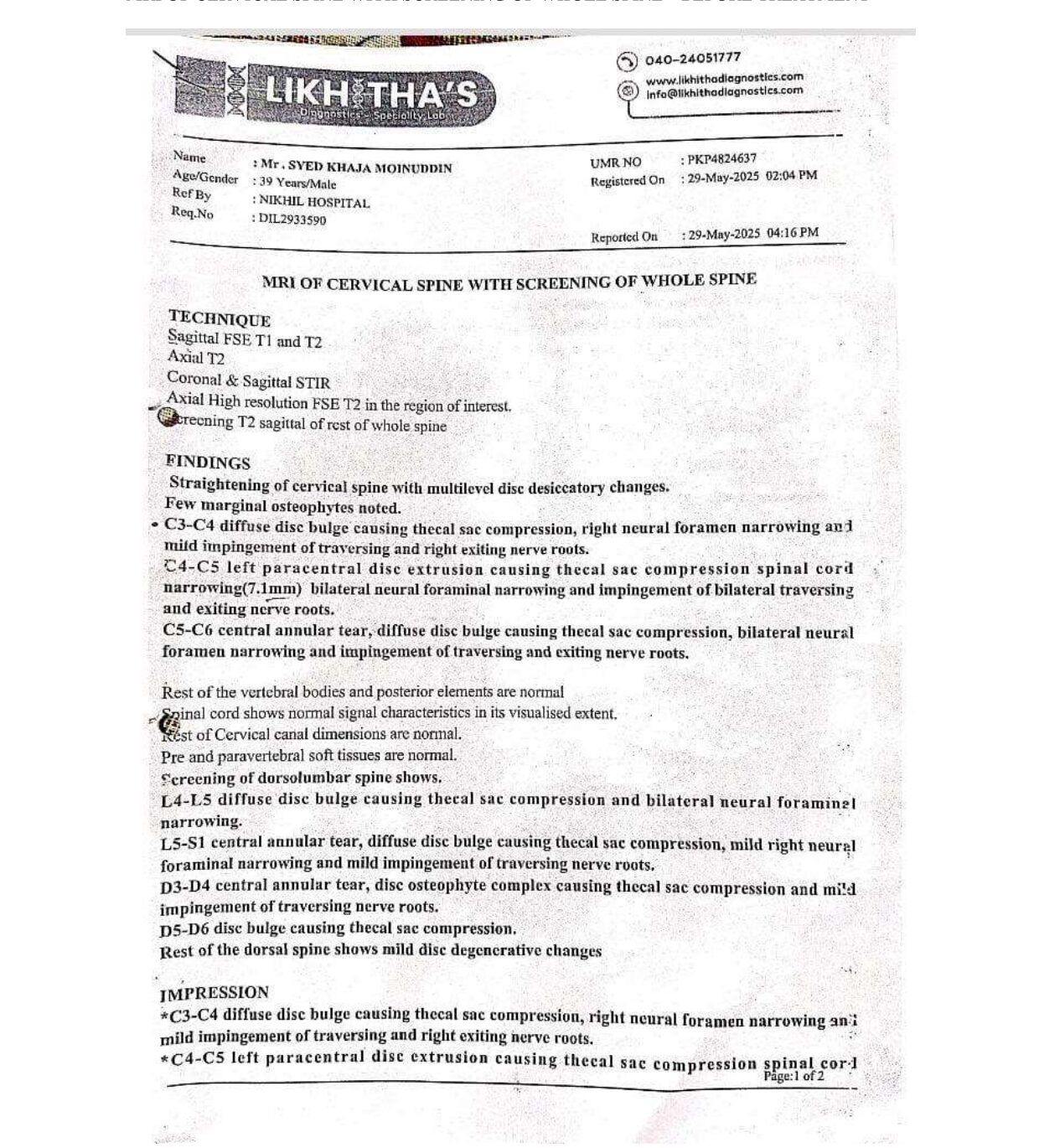
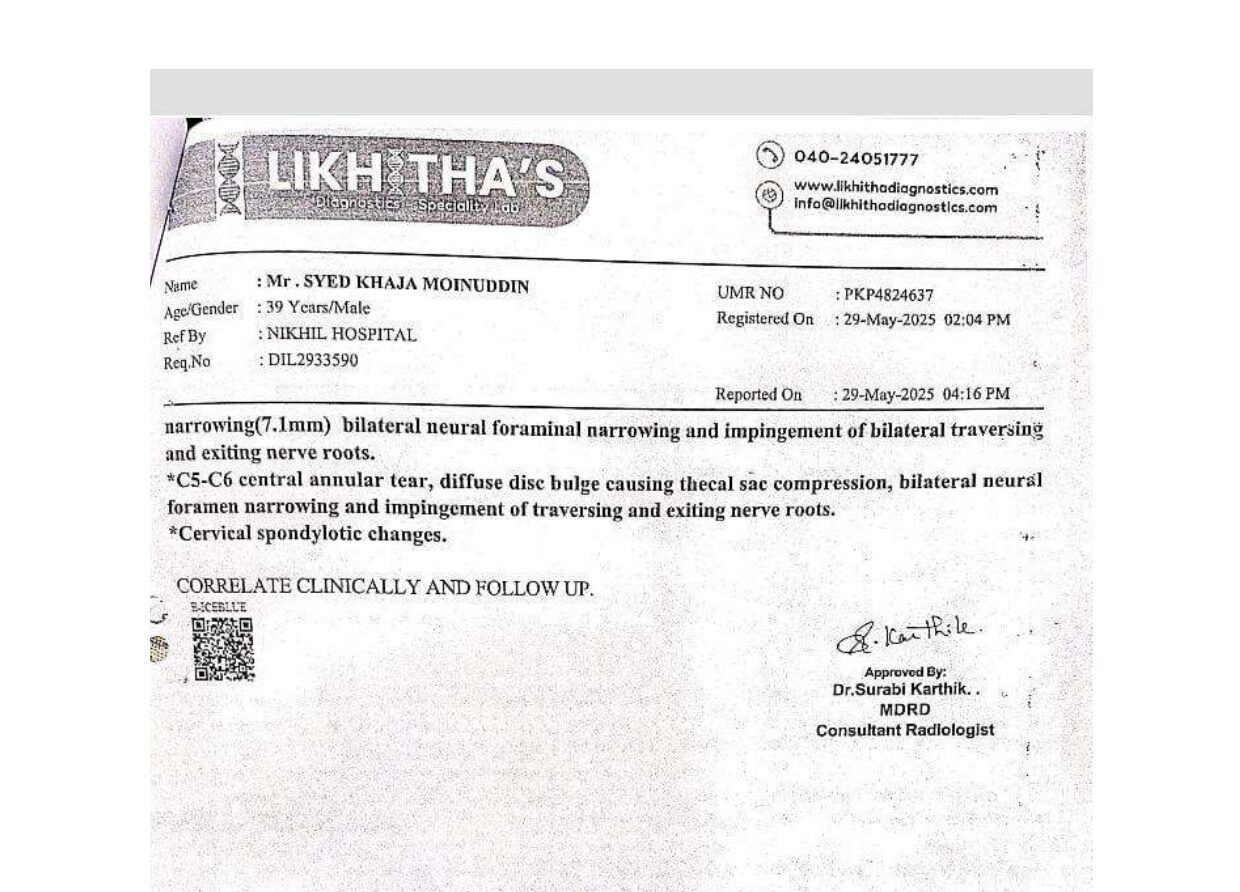
- C4–C5 canal dimension: 7.1 mm
Modern Diagnosis: Cervical Intervertebral Disc Disease (Cervical Disc Prolapse)
Ayurvedic Correlation: Asthi–Majja Dhatu Kshaya
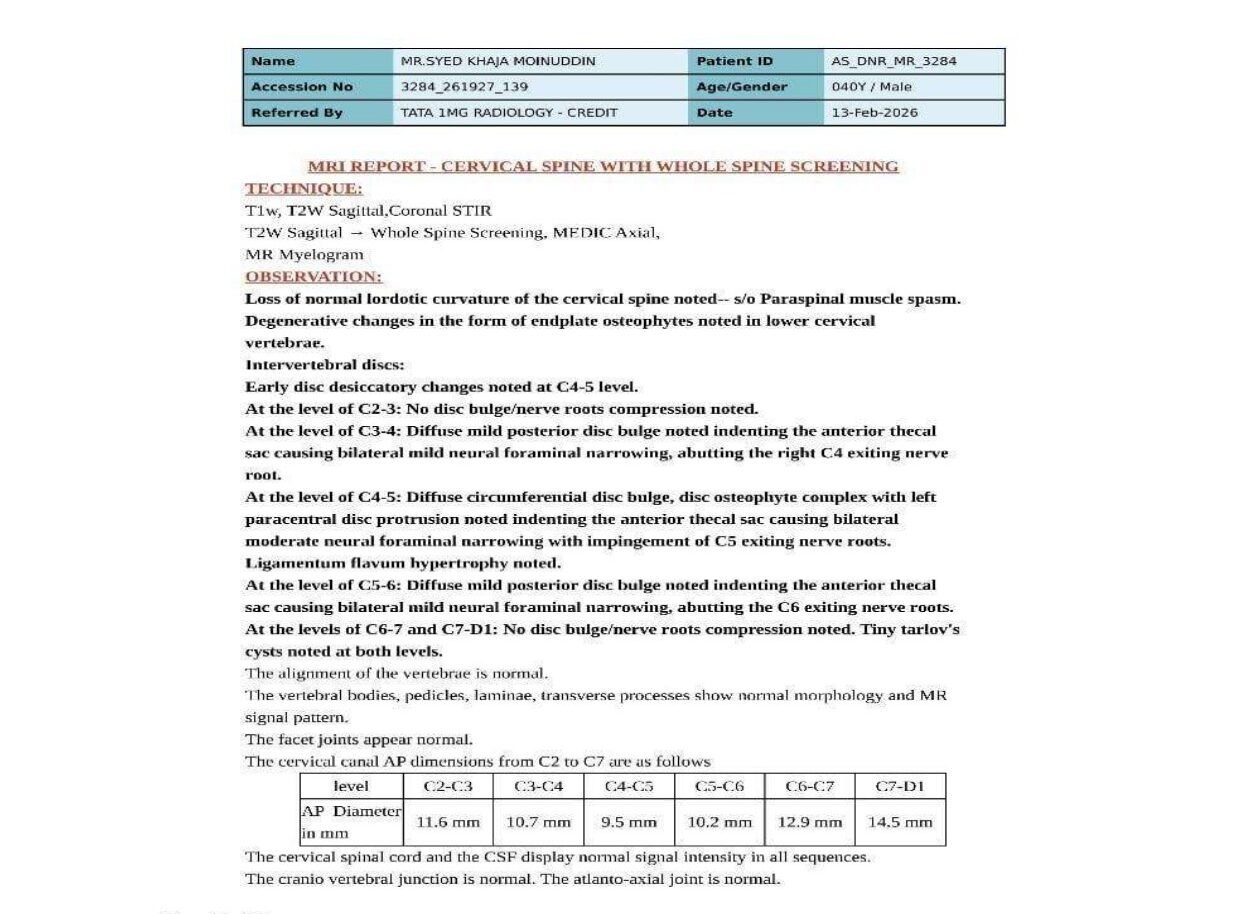
Significant Increase in C4–C5 Cervical Canal Dimension
From 7.1 mm (Before Treatment) to 9.5 mm (After Treatment)
The most remarkable and clinically significant outcome of this case was the measurableimprovement in the antero-posterior cervical canal dimension at the C4–C5 level, whichincreased:
MRI OF CERVICAL SPINE WITH SCREENING OF WHOLE SPINE – BEFORE TREATMENT
21-Day Structured Ayurvedic Treatment Protocol
Phase 1: Ama Pachana & Pain Reduction (Day 1–7)
Goal: Reduce inflammation, nerve irritation, stif ness & acute symptoms
1. Greeva Basti (Daily)
- Local nourishment to cervical discs
- Reduces inflammation
- Relieves nerve compression symptoms
- Improves flexibility
2. Abhyanga (Medicated Oil Massage – Daily)
- Relaxes paraspinal muscles
- Reduces muscle spasm
- Improves blood circulation
- Decreases stiffness
3. Kashaya Dhara (Alternate Days)
- Anti-inflammatory effect
- Reduces burning & nerve irritation
- Calms aggravated Vata
4. Patra Pottali Swedam (Herbal Bolus Fomentation)
- Reduces pain and stiffness
- Improves range of motion
- Enhances local circulation
5. Internal Medicines (Ama reducing & Vata pacifying)
- Controls inflammation
- Reduces radicular pain
- Prepares body for deeper therapies
Phase 2: Deep Rejuvenation & Nerve Nourishment (Day8–14)
Goal: Strengthen muscles, nourish Asthi & Majja Dhatu, improve nerve function
6. Pizhichil
- Deep tissue rejuvenation
- Strengthens musculoskeletal system
- Slows degenerative changes
7. Njavarakizhi
- Improves muscle tone
- Enhances nerve nourishment
- Reduces numbness and weakness
8. Shirodhara (If stress & headache present)
- Relieves cervical tension
- Reduces stress-induced muscle tightness
- Improves sleep quality
9. Cervical Traction (Ayurvedic Method – if indicated)
- Reduces disc pressure
- Improves nerve space
- Relieves radiating pain
10. Internal Rasayana Medicines
- Supports disc regeneration
- Strengthens bone & nerve tissue
- Improves long-term stability
Phase 3: Vata Shamana & Recurrence Prevention (Day15–21)
Goal: Correct root cause (Vata imbalance), stabilize spine & prevent relapse
11. Vasti (Medicated Enema Therapy – Yoga Vasti Pattern)
- Most effective therapy for Vata disorders
- Nourishes spinal structures
- Prevents recurrence
- Improves nerve conduction
12. Greeva Basti (Maintenance Sessions)
- Sustains lubrication of cervical joints
- Improves mobility
- Reduces residual stiffness
13. Strengthening & Postural Correction Therapy
- Improves cervical stability
- Prevents disc stress
- Corrects ergonomic issues
14. Diet & Lifestyle Regulation (Pathya-Apathya)
- Prevents Vata aggravation
- Enhances healing
- Maintains long-term spinal health
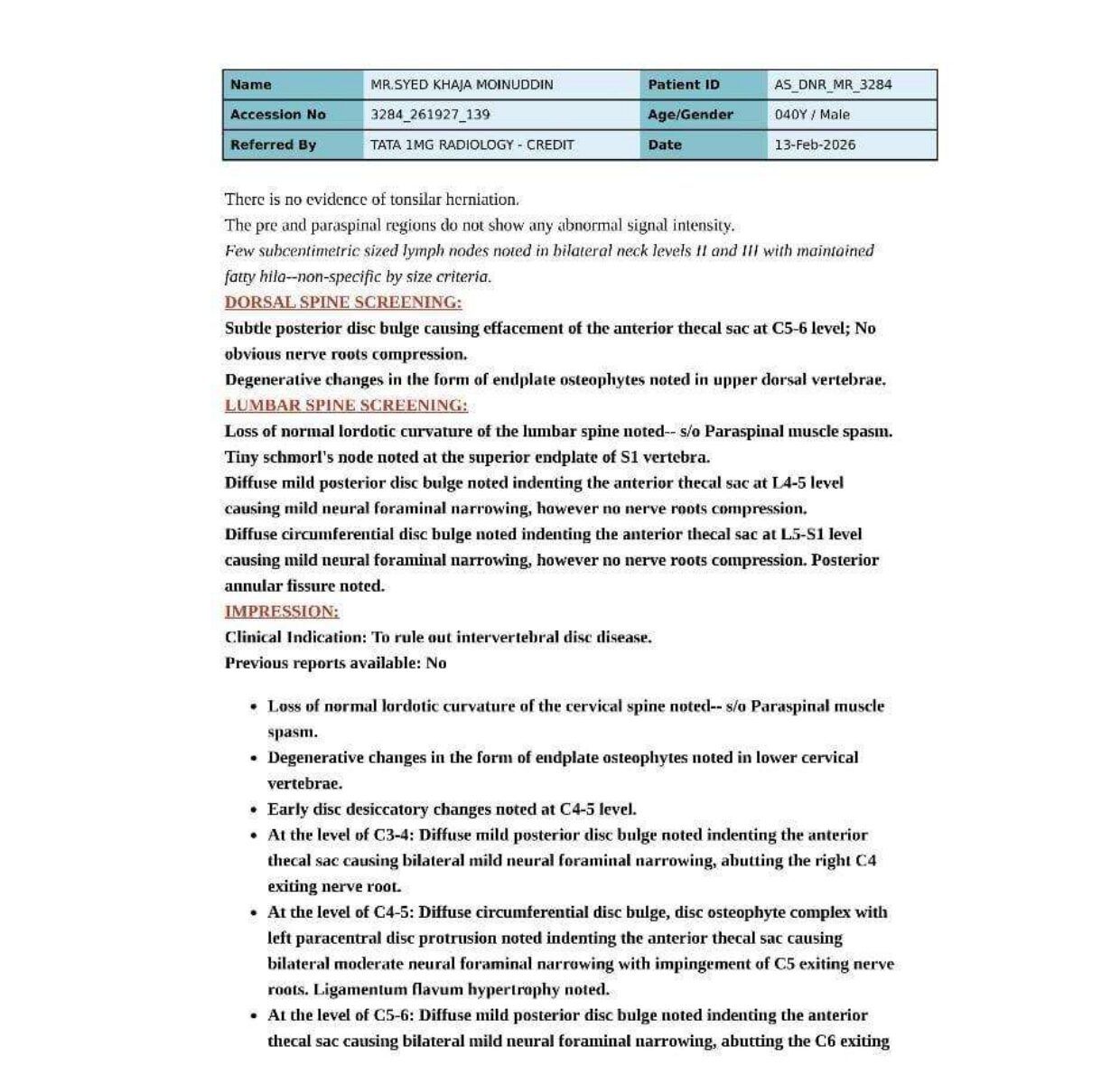
MRI REPORT – CERVICAL SPINE WITH WHOLE SPINE SCREENING AFTER TREATMENT
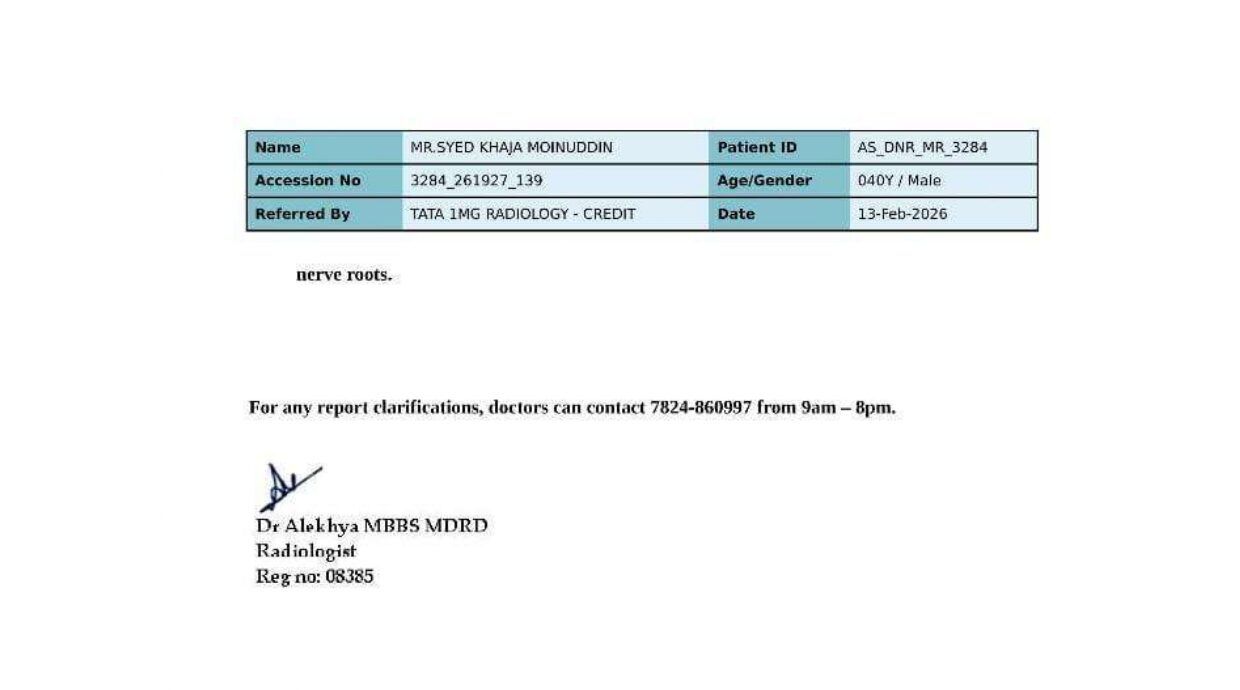
BEFORE & AFTER MRI COMPARISON
| MRI Findings | Before Treatment (May 2025) MRI Report May 2025 |
After Treatment (Feb 13, 2026) MRI Feb 2026 |
|---|---|---|
| Cervical Lordosis | Loss of normal curvature | Persistent loss noted but muscle spasm clinically reduced |
| C3–C4 Level | Mild posterior disc bulge, mild foraminal narrowing | Mild bulge persists, no progression |
| C4–C5 Level |
Dimension: 7.1 mm
Disc osteophyte complex with left paracentral protrusion, |
Dimension: 9.5 mm
Bulge persists but no worsening; clinical symptoms significantly reduced |
| C5–C6 Level | Mild disc bulge with nerve root abutment | Mild bulge, no significant compression |
| Osteophytes | Present in lower cervical vertebrae | Degenerative changes stable |
| Ligamentum Flavum | Hypertrophy present | Stable |
| Spinal Cord Signal | Normal | Normal |
| Lumbar Findings | L4–L5 & L5–S1 mild bulges | Stable, no progression |
Summary of Clinical Improvements
Following Ayurvedic management:
- C4–C5 canal dimension increased to 9.5 mm from 7.1mm
- Significant reduction in neck pain
- Marked decrease in radiating arm pain
- Numbness and tingling considerably reduced
- Improved range of cervical movements
- Better sleep and daily functional ability
- No surgical intervention required
Although structural degenerative changes remained radiologically stable, clinical recoverywas remarkable, indicating successful conservative management through Ayurvedic
therapy.This case highlights the effectiveness of structured Ayurvedic management in treating Cervical Intervertebral Disc Disease with Radiculopathy, focusing not onlyonsymptom relief but also on improving spinal stability and quality of life.
