

Patient Profile
- Name: Mrs. Baby D V
- Age: 67 years
- Sex: Female
Chief Complaints (At the Time of First Consultation)
The patient presented with the following complaints:
- Severe central chest pain on exertion and occasionally at rest
- Profuse sweating associated with chest discomfort
- Breathlessness, initially on exertion and later during routine activities
- Easy fatigability even with minimal physical effort
- Generalized weakness and lack of stamina
- Reduced exercise tolerance
- Intermittent heaviness and discomfort over the chest region
- Disturbed sleep due to chest discomfort and anxiety related to cardiac health
There was no history of syncope or documented palpitations at the time of presentation.
History of Presenting Illness
Mrs. Baby D V, a 67-year-old female, was apparently healthy prior to the onset of her current illness.She gradually developed easy fatigability and reduced exercise tolerance, which she initially ignored,attributing them to age-related weakness.Over the next few days, she began experiencing intermittent chest discomfort, described as a tightness and heaviness in the central chest, particularly during exertion such as walking, climbing stairs, or household work. These episodes were often associated with breathlessness and excessive sweating, and were relieved partially with rest.
As the condition progressed, the chest pain episodes increased in frequency and severity, occasionally occurring even with minimal activity. The patient also reported marked breathlessness, generalized weakness, and disturbed sleep due to fear and anxiety regarding her cardiac symptoms.She underwent routine cardiac evaluation prior to initiation of Ayurvedic treatment. 2D Echocardiography revealed regional wall motion abnormality with hypokinesia of the left ventricularapex, along with Grade I diastolic dysfunction and mild mitral regurgitation, indicating underlying myocardial dysfunction.
Although there was no previously documented history of myocardial infarction, the symptom complex of severe chest pain, sweating, and breathlessness was highly suggestive of ischemic cardiac pathology.Due to persistent symptoms and impaired quality of life, the patient opted for Ayurvedic management under medical supervision.
Past Medical History
- Known case of age-related cardiovascular changes
- No previously documented myocardial infarction
- No known history of chronic hypertension
- No history of diabetes mellitus
- No prior cardiac surgical interventions
General Examination (Before Treatment)
- Patient was conscious, oriented, and cooperative
- Moderately built and nourished
- Pulse: Regular
- Blood Pressure: Within acceptable limits for age
- No pallor, cyanosis, clubbing, or icterus
- No pedal edema
Systemic Examination
Cardiovascular System
- S1 and S2 clearly heard
- No added sounds or murmurs
- Functional capacity mildly reduced
Respiratory System
- Bilateral breath sounds clear
- No crepitations or wheeze
- No clinical evidence of pulmonary hypertension
Investigations
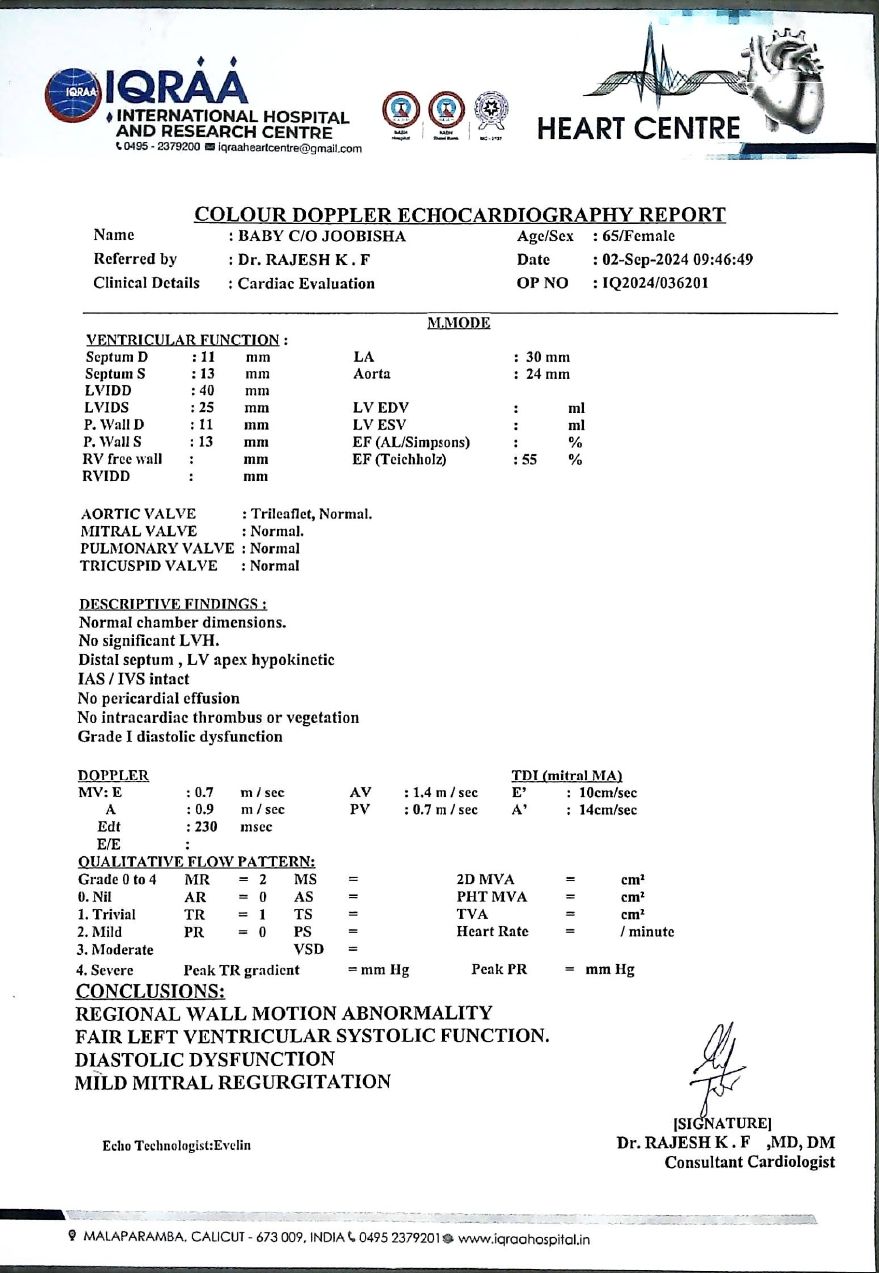
Echocardiography – Before Ayurveda Treatment
Date: 02 September 2024
Findings:
- Normal cardiac chamber dimensions
- No significant left ventricular hypertrophy
- Distal septal involvement
- Left ventricular apex hypokinetic
- Regional wall motion abnormality present
- Grade I diastolic dysfunction
- Fair left ventricular systolic function
- Mild mitral regurgitation
- No pulmonary hypertension
Measured Parameters
- LVIDd: 40 mm
- LVIDs: 25 mm
- Ejection Fraction (EF): 55%
- Aorta: 24 mm
- Left Atrium: 30 mm
Ayurvedic Diagnosis (Conceptual)
- Hridroga (Ischemic heart disease)
- Vata–Kapha predominance
- Impaired Rasa–Rakta circulation
- Dhatukshaya contributing to reduced cardiac strength
Ayurvedic Intervention
Initial Phase (Stabilization)
Procedure
- Choorna Vasti:
- Vaishwanara Choorna – 10 g
- Water – 350 ml
Medicines
- Maha Dhanwantaram Gulika – 1 tablet TID
- Markandeya Rasam – 25 ml BD
- Dasamoolasavam – 25 ml BD
- Karpooradi Tailam – External application over chest region
Following this phase and emergency supportive interventions, the patient became clinically stable
with reduction in chest pain and breathlessness.
Second Phase (From 11.06.2024 onwards)
External Therapies
- Urovasthi with Dhanyamlam – 2 days
- Urovasthi with Dhanwantara Tailam – 5 days
Internal Medicines
- Drakshadi Kashayam + Guloochyadi Kashayam – 15 ml BD with 30 ml warm water (6 AM & 6 PM)
- Maha Dhanwantaram Tablet – 1 tablet BD
- Shunthyadi Choorna – 1 teaspoon at 3 PM with hot water
- Sukumara Ghritam – 1 teaspoon at bedtime
- Bala Tailam – 10 drops BD along with kashayam
Clinical Improvement After Treatment
- Complete relief from severe chest pain
- Marked reduction in sweating and breathlessness
- Improved exercise tolerance
- Enhanced functional capacity
- Better sleep quality
- Improved sense of physical and mental well-being
- No recurrence of acute cardiac symptoms
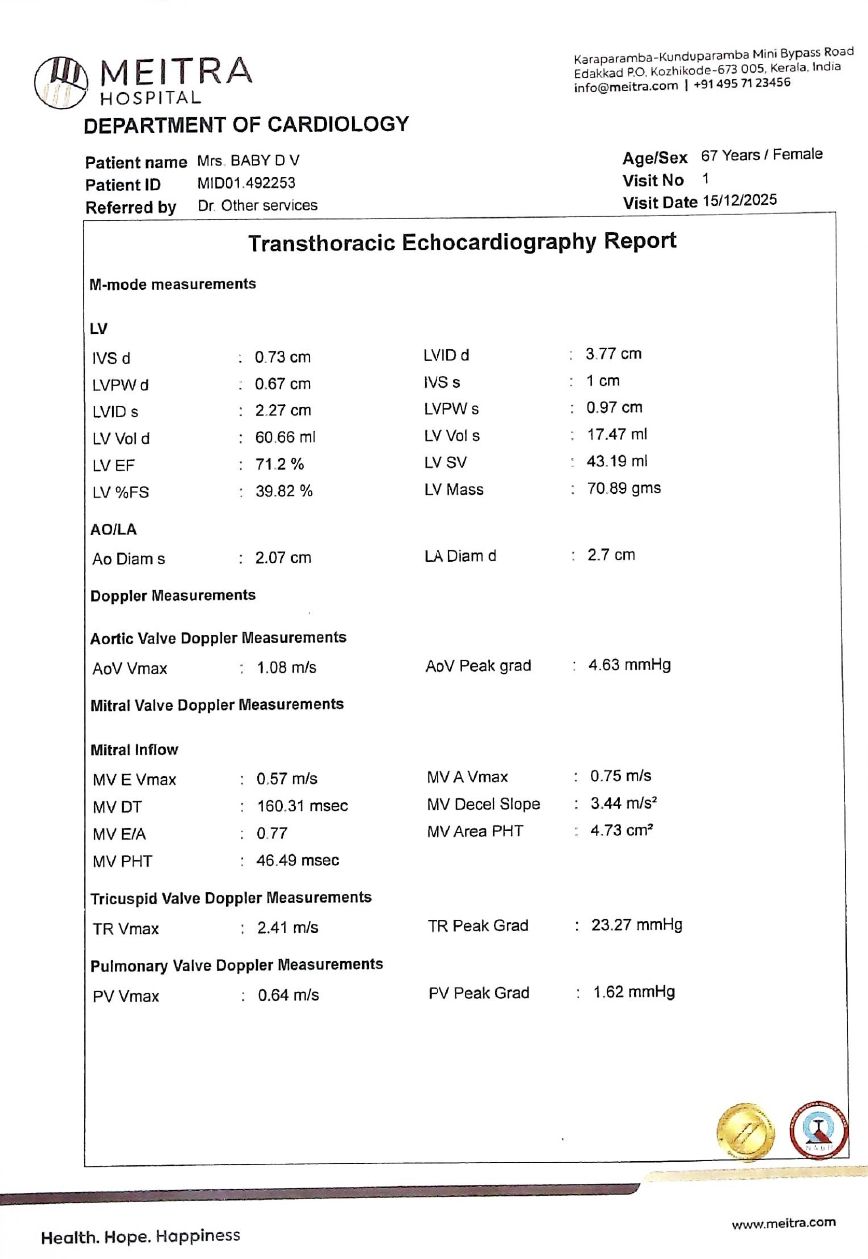
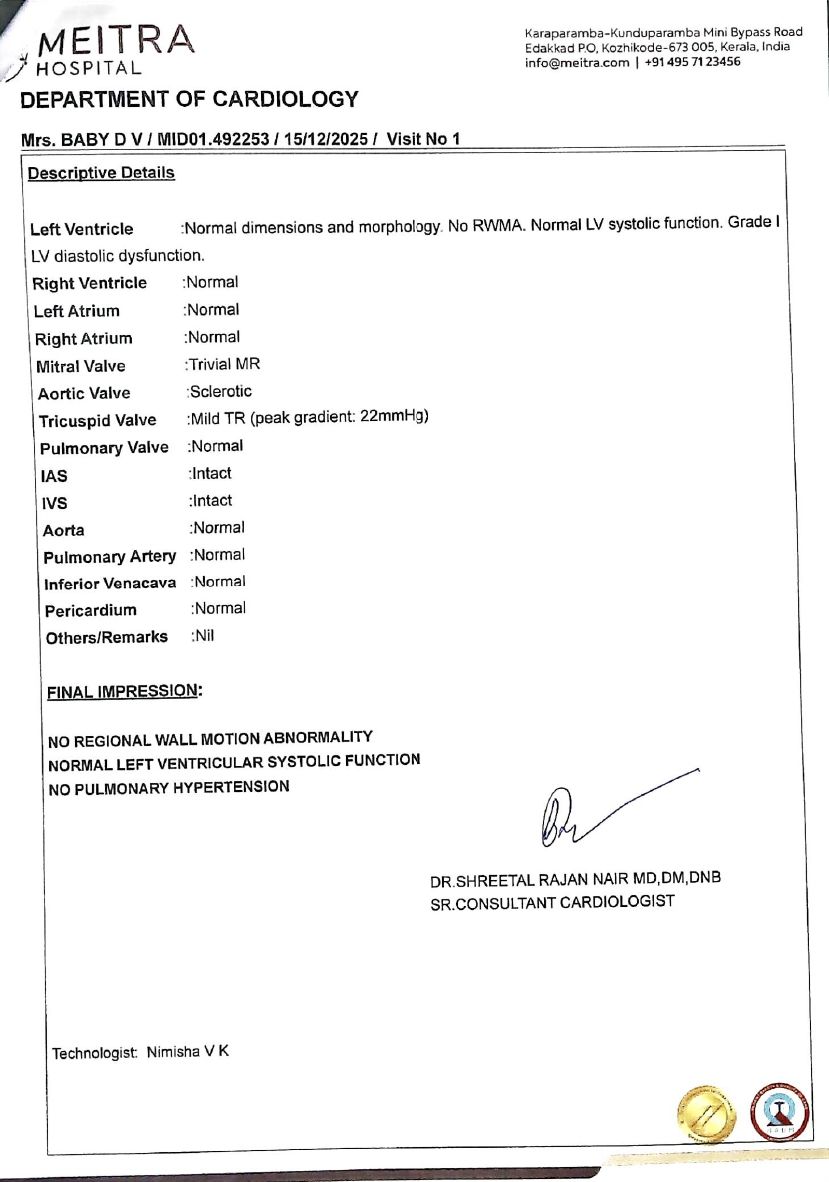
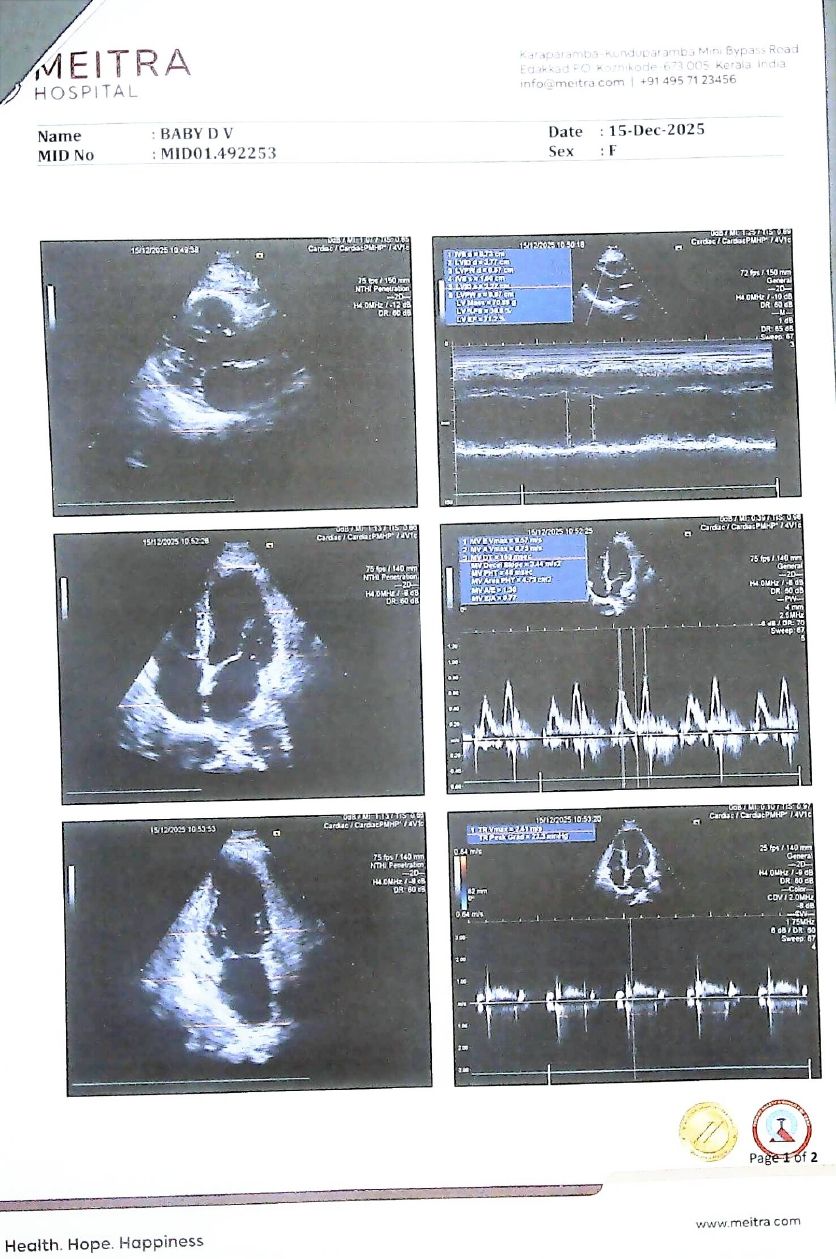
Echocardiography – After Ayurveda Treatment
- Normal left ventricular wall motion
- No regional wall motion abnormality
- Normal LV systolic function
- Improved diastolic function
- No significant mitral regurgitation
- No pulmonary hypertension
Comparative Echocardiography Findings
| Parameter | Before Treatment (02.09.2024) | After Treatment |
|---|---|---|
| Regional wall motion abnormality | Present | Absent |
| LV apex | Hypokinetic | Normal |
| LV systolic function | Fair | Normal |
| Diastolic function | Grade I dysfunction | Improved |
| Mitral regurgitation | Mild | Absent |
| Pulmonary hypertension | Absent | Absent |
CONCLUSION
This case demonstrates a 67-year-old female with ischemic cardiac symptoms characterizedby severe chest pain, sweating, and breathlessness, supported by echocardiographic evidenceof regional wall motion abnormality and diastolic dysfunction. Following systematic Ayurvedic intervention, the patient showed significant symptomatic relief, functional improvement, and objective echocardiographic recovery, indicating the beneficial supportive role of Ayurveda in ischemic heart disease under proper medical supervision.
Dr. Nimisha S Kumar (RMO)
Sree Subramania Ayurveda Nursing Home
