

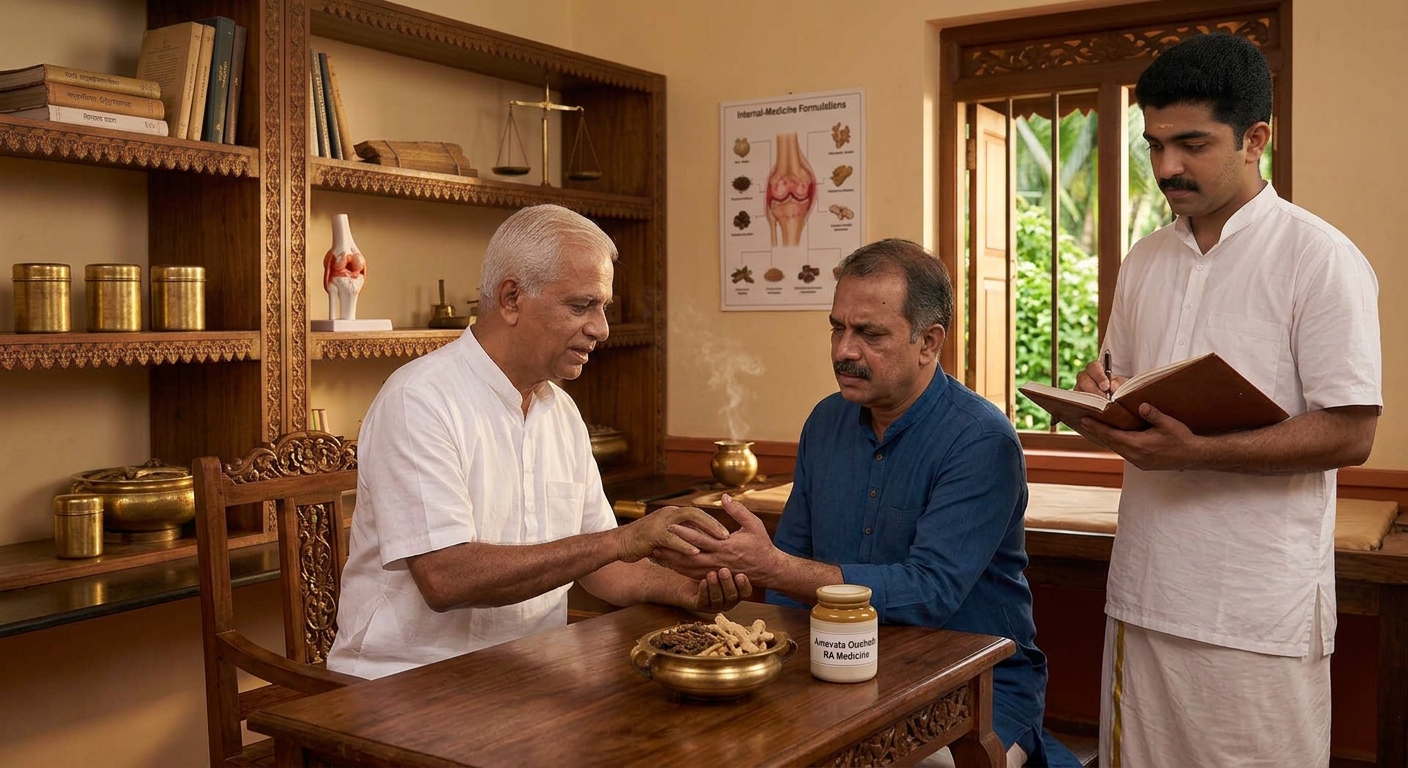
Ayurvedic Treatment for Rheumatoid Arthritis Kerala
Rheumatoid arthritis (RA) is exhausting in a way that’s hard to explain to someone who hasn’t lived with it — the morning stiffness that takes an hour to ease, the swelling that flares without warning, the fatigue that sits underneath everything else. If you’ve been managing RA with medication alone and still feel like you’re just keeping symptoms at bay rather than actually improving, you’re not imagining it. Many patients reach a plateau with conventional treatment where flare-ups are controlled but underlying joint health doesn’t really get better.
This is where ayurvedic treatment for rheumatoid arthritis offers a different angle — not as a replacement for your rheumatologist, but as a complementary approach that works on inflammation, joint nourishment, and the digestive imbalances Ayurveda considers central to autoimmune joint disease. Here’s what that treatment actually looks like.
How Ayurveda Understands Rheumatoid Arthritis
RA is classified in Ayurveda as Amavata — literally, a condition where ama (undigested toxins from poor digestion) combines with aggravated Vata and lodges in the joints, triggering inflammation, pain, and swelling. This is why ayurvedic treatment for RA almost always starts by correcting digestion (Agni) before moving on to joint-specific therapies — treating only the joints without addressing the root ama buildup tends to give short-lived results.
Core Treatment Approach
Panchakarma-Based Detoxification
Given RA’s link to ama accumulation, most treatment programmes begin with a Panchakarma-based cleanse to clear toxins before any joint-specific oil therapy begins. This preparatory phase is essential — applying oils to inflamed, toxin-laden joints too early can sometimes worsen symptoms, which is why sequencing matters so much in RA care.
Dhanyamla Dhara
A specialised therapy using a fermented, herb-infused liquid (Dhanyamla) poured warm over affected joints, this is particularly effective for reducing inflammation and stiffness associated with rheumatic conditions. You can learn more about this therapy on our Dhanyamla Dhara page.
Thakra Dhara and Ksheera Dhara
These are continuous-pour therapies using medicated buttermilk or milk decoctions, streamed over the joints or, in some cases, the head, to calm inflammation and soothe the nervous system — RA flare-ups are often worsened by stress, so this dual action matters more than it might initially seem.
Internal Herbal Medicines
Alongside external therapy, physicians prescribe internal formulations aimed at reducing systemic inflammation and correcting digestive imbalances, adjusted throughout your stay based on your response.
What an In-Patient RA Programme Looks Like
Rheumatoid arthritis treatment is typically structured as a 21 to 28 day in-patient programme, reflecting how gradually autoimmune joint conditions respond to treatment. Because RA symptoms can vary significantly day to day, physicians conduct twice-daily consultations to monitor your response and adjust which therapies are used, and when.
If you’re currently on disease-modifying medication for RA, this will be reviewed as part of your initial consultation — ayurvedic treatment is generally designed to work alongside your existing care rather than requiring you to stop conventional medication abruptly. You can see our full range of on-site treatment facilities on our Facilities page.
Real Outcomes From Long-Term RA Patients
Many of the patients who come to us for rheumatoid arthritis have been managing the condition for years and are looking for something that goes beyond symptom control. Our clinical team has documented real recovery patterns in our Rheumatoid Arthritis case study, which is worth reviewing if you want to understand what a realistic treatment timeline and outcome looks like before booking.
Is This the Right Approach for You?
Ayurvedic treatment tends to help most with reducing flare frequency, joint stiffness, and inflammation-related fatigue — and many patients report being able to reduce their reliance on painkillers over time. It’s not a cure for RA, and it works best as part of an ongoing care plan alongside your rheumatologist, not as a one-time fix.
Start Managing RA Differently
If medication alone hasn’t given you the improvement you were hoping for, it may be worth exploring what a structured ayurvedic programme can add to your RA care. Book a consultation with our physicians to discuss your case.
