

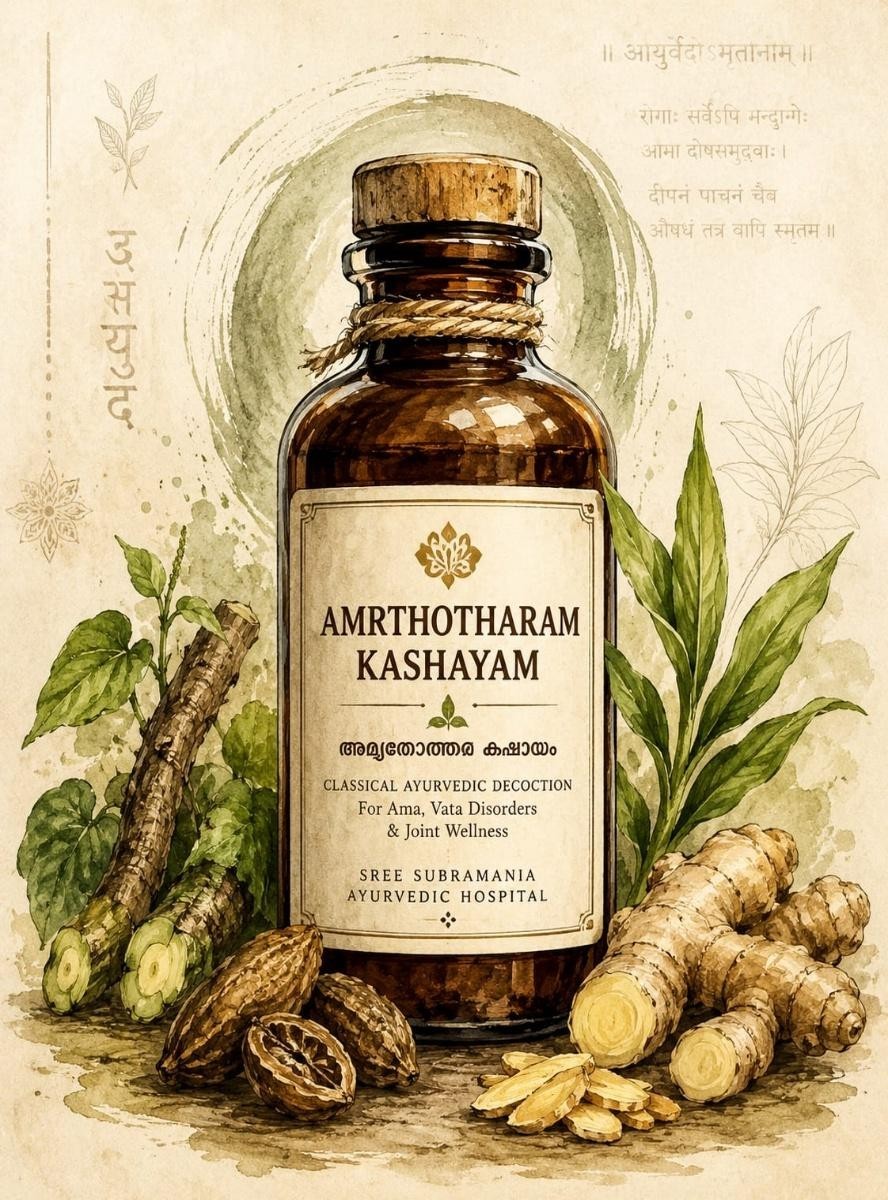
Ayurveda, the ancient system of medicine that has served humanity for thousands of years, places great importance on restoring balance within the body rather than merely suppressing symptoms. Among the many classical Ayurvedic formulations, Amruthotharam Kashayam stands out as one of the most trusted herbal decoctions for managing disorders associated with Ama (metabolic toxins) and Vata imbalance, particularly Amavata, which closely resembles Rheumatoid Arthritis in modern medicine.
At Sree Subramania Ayurvedic Hospital, every formulation is prepared with meticulous attention to quality, authenticity and traditional wisdom. Our physicians believe that the effectiveness of a medicine begins long before it reaches the patient, it starts with the careful selection of herbs, precise preparation methods and uncompromising quality standards.
This article explores the heritage, science and preparation of Amruthotharam Kashayam, explaining why it continues to be one of Ayurveda’s most valued formulations in the management of inflammatory joint disorders and digestive health.
Why is Amruthotharam Kashayam Important in Rheumatoid Arthritis?
The Philosophy Behind Every Drop
At Sree Subramania Ayurvedic Hospital, the preparation of herbal medicines is regarded as more than a manufacturing process; it is the continuation of a time-honoured Ayurvedic tradition that has been refined through generations of classical practice. We firmly believe that the therapeutic effectiveness of every formulation begins with the quality of the raw herbs selected. Traditional methods of preparation are carefully preserved wherever appropriate to maintain the authenticity and efficacy of Ayurvedic medicines. Each batch undergoes meticulous inspection and quality control to ensure consistency, purity, and adherence to classical Ayurvedic principles. As an integral part of our in-house quality assurance practices, special emphasis is placed on the careful selection, cleaning, sorting, and preparation of raw herbs before they are processed into Kashayam, ensuring that every formulation meets the highest standards of quality and therapeutic value.
Amruthotharam Kashayam
Amruthotharam Kashayam is a classical Ayurvedic herbal decoction (Kwatha) described in traditional Ayurvedic texts. It is primarily indicated for conditions arising from the accumulation of Ama, impaired digestion (Agnimandya), inflammatory disorders and diseases involving aggravated Vata and Kapha doshas.
The name itself reflects its significance:
- Amrutha – Refers to Guduchi (Tinospora cordifolia), often called the “nectar of immortality” in Ayurveda due to its rejuvenating properties.
- Uttara – Signifies superiority or
- Kashayam – A herbal decoction prepared by boiling medicinal herbs in water to extract their active constituents.

- Supporting healthy digestion and Metabolism
- Helping reduce the formation of Ama
- Assisting in maintaining balanced inflammatory responses
- Supporting healthy joint function
- Promoting better mobility
- Supporting immune balance
- Enhancing overall well-being
Within a comprehensive Ayurvedic treatment plan including consultation, Panchakarma where appropriate, diet and lifestyle guidance; Amruthotharam Kashayam is often selected as one of the important internal medicines for patients with Amavata.
Note: The choice of medicine and dosage should always be determined by a qualified Ayurvedic physician based on the individual’s condition, constitution (Prakriti) and clinical assessment.
Nature's Powerful Trio Behind a Time-Tested Ayurvedic Formulation; the Three Classical Ingredients of Amruthotharam Kashayam
The therapeutic excellence of Amruthotharam Kashayam lies in the careful combination of three classical herbs. Each ingredient has a distinct role, yet together they work synergistically to address the Ayurvedic concept of Ama, improve digestive fire (Agni), support immune balance and help maintain healthy joints.
- Guduchi (Amrutha/Chittamrith)
- Haritaki (Kadukka)
- Shunthi (Dry Ginger/Chukku)
1. Guduchi (Amrutha/Chittamrith)
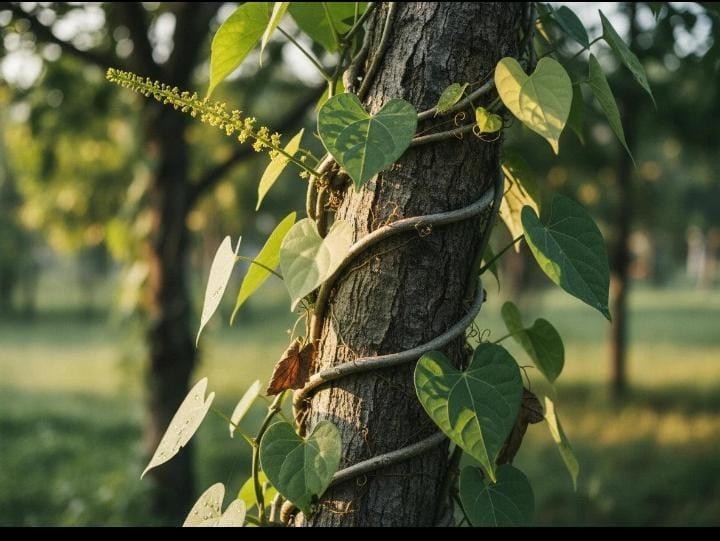
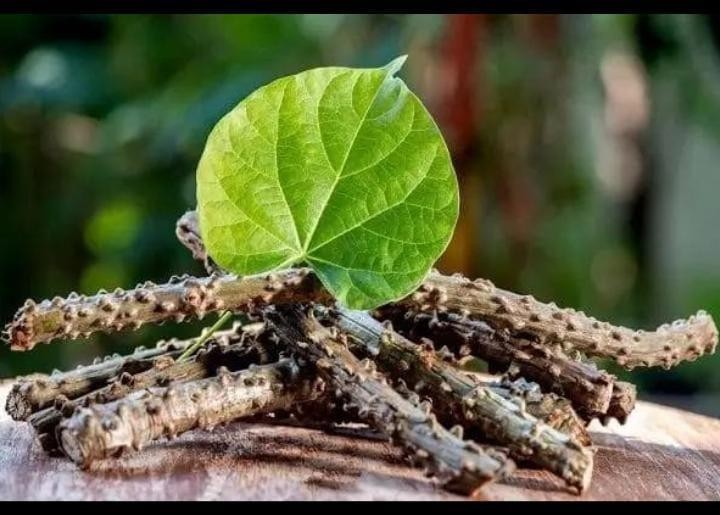
Botanical Name: Tinospora cordifolia
Common Names: –
Sanskrit: Amrutha, Guduchi
Malayalam: Chittamrith
Hindi: Giloy
English: Heart-leaved Moonseed
Ayurvedic Properties
Rasa (Taste): Bitter (Tikta), Astringent (Kashaya)
Guna (Quality): Light (Laghu), Unctuous (Snigdha)
Veerya (Potency): Hot (Ushna)
Vipaka : Sweet (Madhura)
Effect on Doshas: Pacifies Vata, Pitta and Kapha
Health Benefits
- Healthy digestion
- Removal of Ama
- Joint comfort
- Immune balance
- Liver function
- Recovery after illness
- General vitality
Modern Scientific Insights
Modern research has identified several bioactive compounds in Tinospora cordifolia, including:
- Diterpenoid lactones
- Alkaloids
- Glycosides
- Polysaccharides
- Phenolic compounds
Experimental and clinical studies have explored its:
- Immunomodulatory activity
- Anti-inflammatory effects
- Antioxidant properties
- Hepatoprotective potential
- Supportive role in inflammatory disorders
These findings complement its long-standing use in Ayurvedic practice, although more high-quality clinical trials are still needed to confirm specific therapeutic effects.
2. Haritaki (Kadukka)
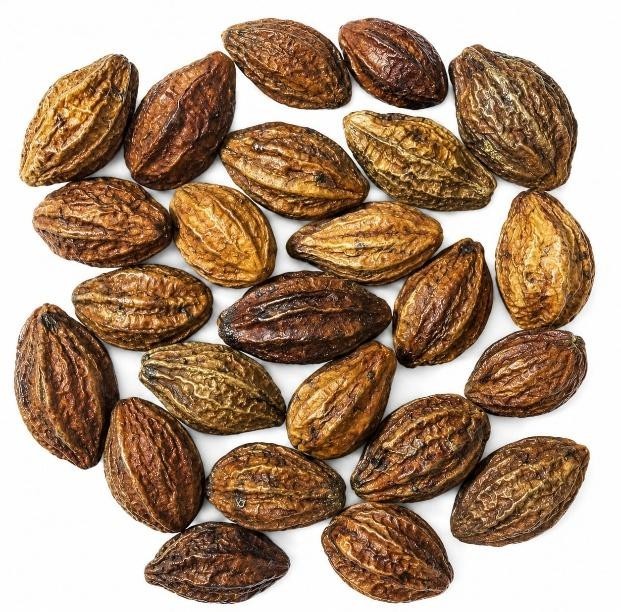
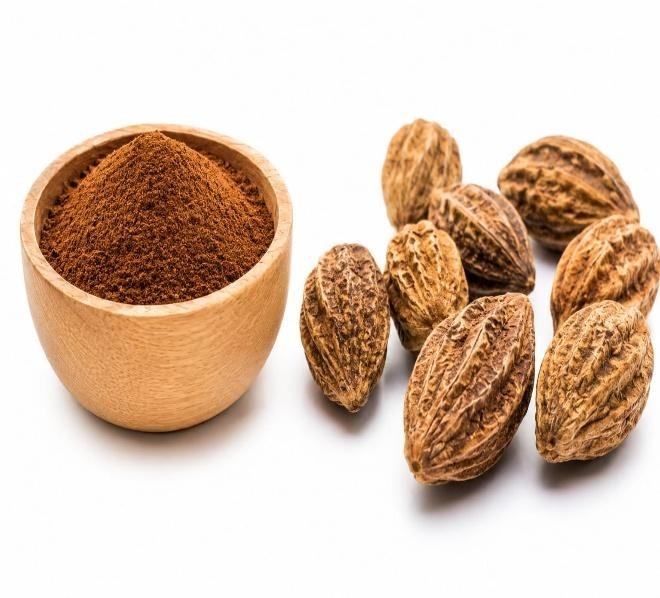
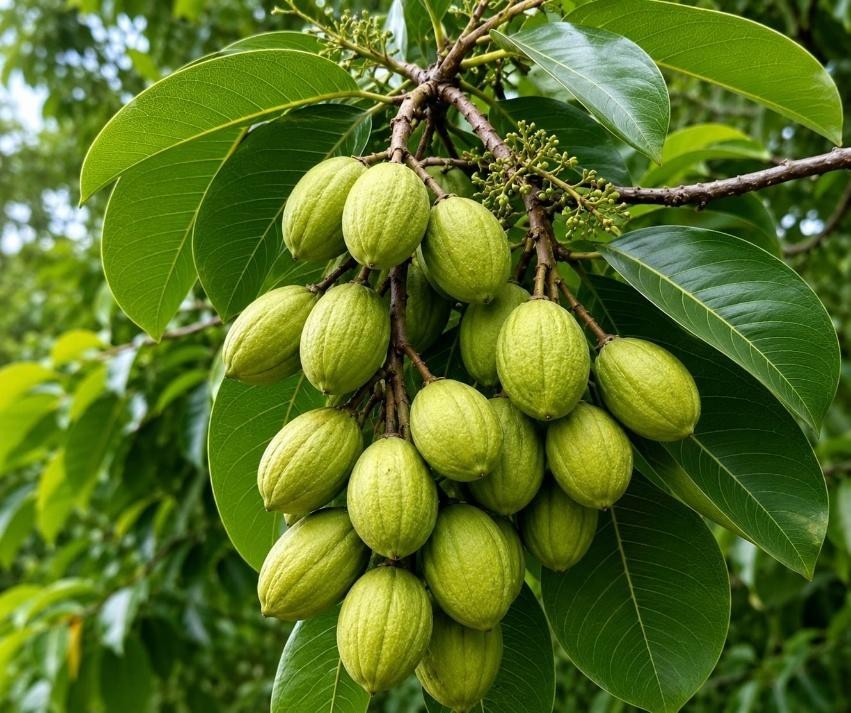
Botanical Name: Terminalia chebula
Common Names: –
Sanskrit: Haritaki
Malayalam: Kadukka
Hindi: Harad
English: Chebulic Myrobalan
Ayurvedic Properties
Rasa: Predominantly Astringent with other tastes except salty
Guna: Light (Laghu), Dry (Rooksha)
Veerya: Warm (Ushna)
Vipaka: Sweet (Madhura)
Effect on Doshas: Balances all three doshas, especially Vata
Health Benefits
- Digestive strength
- Healthy bowel function
- Elimination of Ama
- Appetite
- Detoxification
- Regular bowel movements
- Overall metabolic balance
Modern Scientific Insights
- Haritaki contains numerous naturally occurring phytochemicals, including:
- Chebulagic acid
- Chebulinic acid
- Gallic acid
- Ellagic acid
- Flavonoids
Research has investigated its:
- Antioxidant activity
- Anti-inflammatory properties
- Digestive support
- Antimicrobial effects
3. Shunthi (Dry Ginger/Chukku
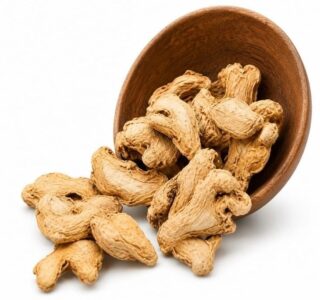
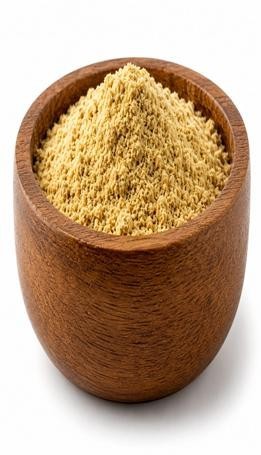
Botanical Name: Zingiber officinale Roscoe
Common Names: –
Sanskrit: Shunthi
Malayalam: Chukku
Hindi: Sonth
English: Dry Ginger
Ayurvedic Properties
Rasa (Taste): Pungent
Guna (Quality): Light, Dry
Veerya (Potency): Hot
Vipaka: Sweet
Dosha Action: Pacifies Vata and Kapha
Health Benefits
- Digestion
- Improves appetite
- Healthy circulation
- Joint comfort
- Respiratory health
- Metabolism
Modern Scientific Insights
- Dry ginger contains several well-studied constituents, including:
- Gingerols
- Shogaols
- Zingerone
- Essential oils
Research has demonstrated:
- Anti-inflammatory activity
- Antioxidant potential
- Digestive support
- Relief of nausea
- Potential benefits in inflammatory conditions
Why These Three Herbs Work Together?
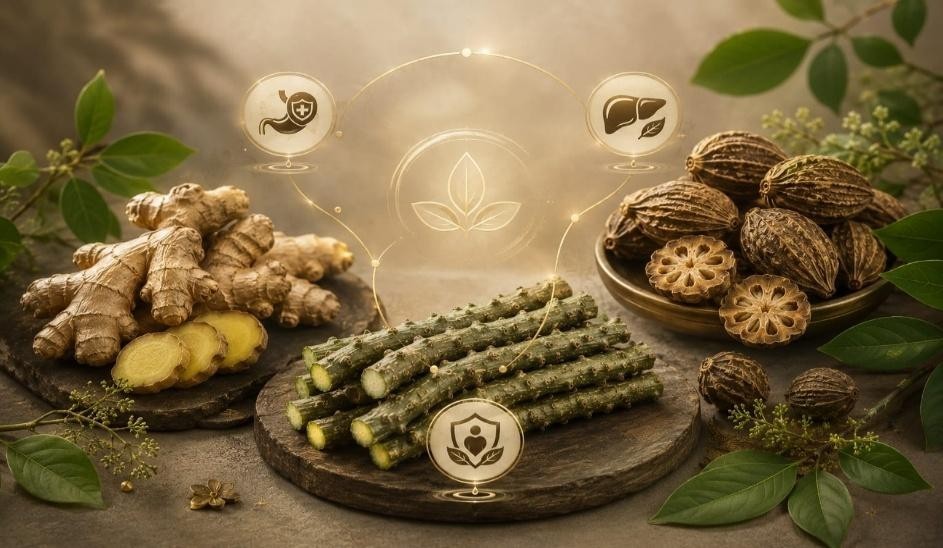
Rather than acting independently, Guduchi, Haritaki and Dry Ginger are understood in Ayurveda to work in harmony.
Herb and Primary Traditional Role
- Guduchi (Tinospora cordifolia): Supports immune balance, helps reduce Ama, promotes rejuvenation
- Haritaki (Terminalia chebula): Supports digestion, bowel health and detoxification
- Dry Ginger (Zingiber officinale): Kindles digestive fire (Agni) and supports healthy metabolism
This complementary combination addresses multiple aspects of health simultaneously digestive function, metabolic balance and joint wellness which is why Amruthotharam Kashayam has remained a trusted formulation for generations.
The Preparation of Amruthotharam Kashaya; where Classical Ayurvedic Wisdom Meets Uncompromising Quality
The effectiveness of an Ayurvedic medicine depends not only on what herbs are used, but also on how they are selected, processed and prepared. Ayurveda places great emphasis on Dravya (quality of ingredients), Samskara (method of processing) and Yukti (scientific application).
At Sree Subramania Ayurvedic Hospital, we believe that every stage of preparation contributes to the consistency and quality of the final medicine. Our pharmacy follows traditional Ayurvedic principles while maintaining rigorous quality standards throughout the process.
From Nature to Medicine
The journey of Amruthotharam Kashayam begins long before the herbs enter the preparation room. Every ingredient is carefully evaluated for its identity, freshness and suitability before it is accepted for use. Each batch undergoes a systematic process to help ensure that only high-quality raw materials are selected.
STEP 1: CAREFUL SELECTION OF RAW HERBS
- Verify correct botanical identity
- Select herbs of appropriate maturity
- Check natural colour and characteristic aroma
- Ensure herbs are free from mould, insect damage and contamination
- Accept only herbs meeting internal quality standards
STEP 2: CLEANING & INITIAL PROCESSING
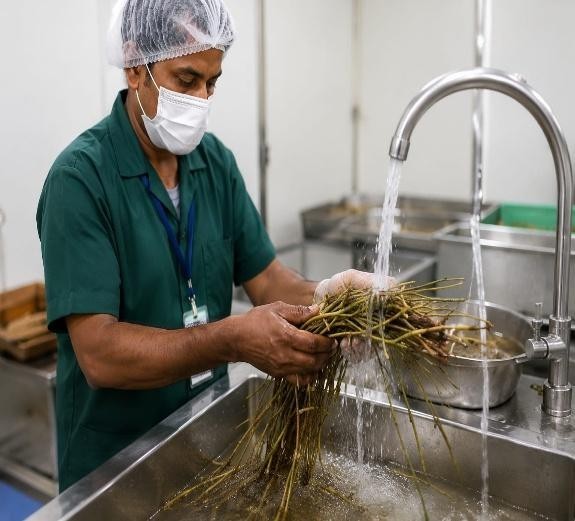
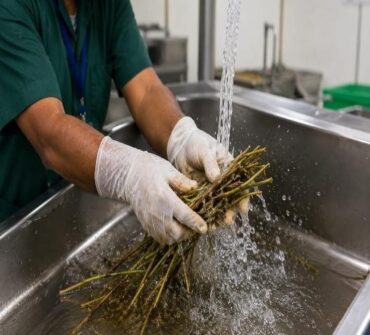
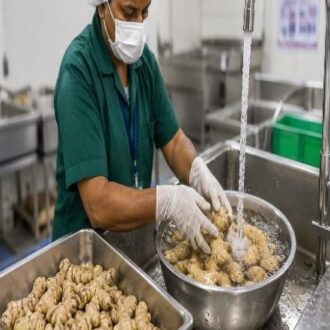
- Remove dust, soil and surface impurities
- Eliminate foreign materials
- Wash and clean raw materials wherever applicable
- Prepare herbs for further processing
STEP 3: TRADITIONAL PREPARATION PRACTICES
One of the distinctive practices followed at Sree Subramania Ayurvedic Hospital is the careful preparation of the Selected Herbs before decoction
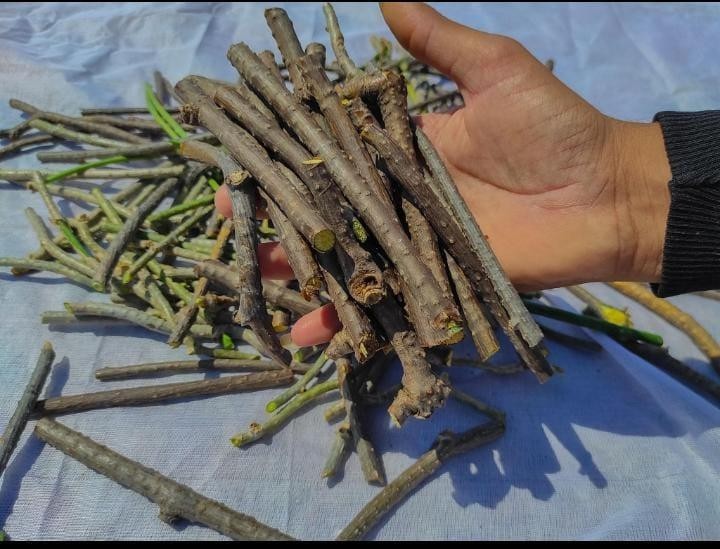
Preparation of Guduchi(Chittamrith)
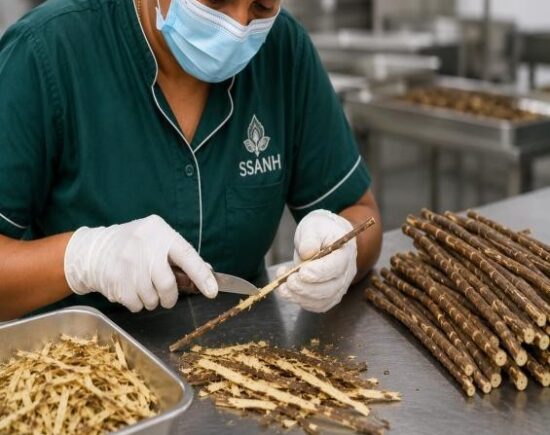
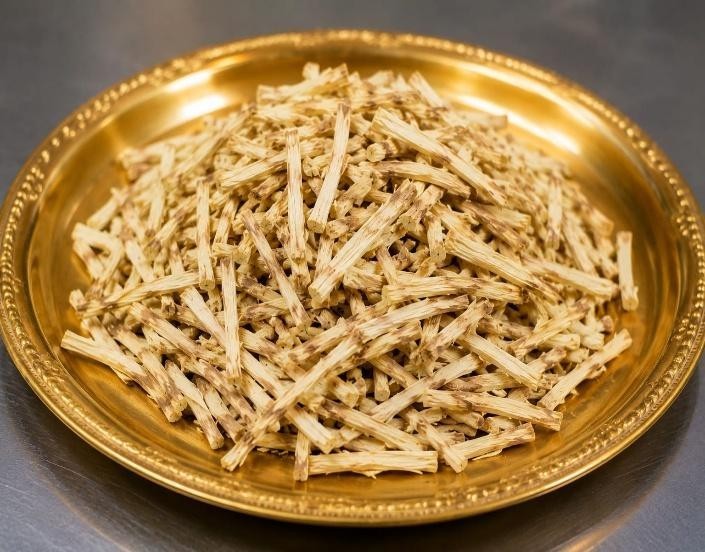
- Mature stems are Selected
- The Outer bark is Carefully removed
- Then inner stem is then cut into smaller pieces suitable for decoction
NOTE: – This method is part of our traditional in- house quality protocol, developed through year of practical experience.
Preparation of Dry Ginger (Chukku)
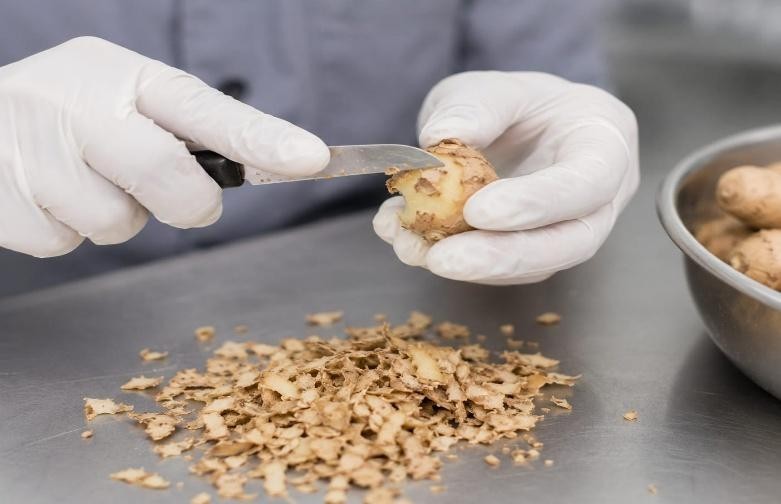
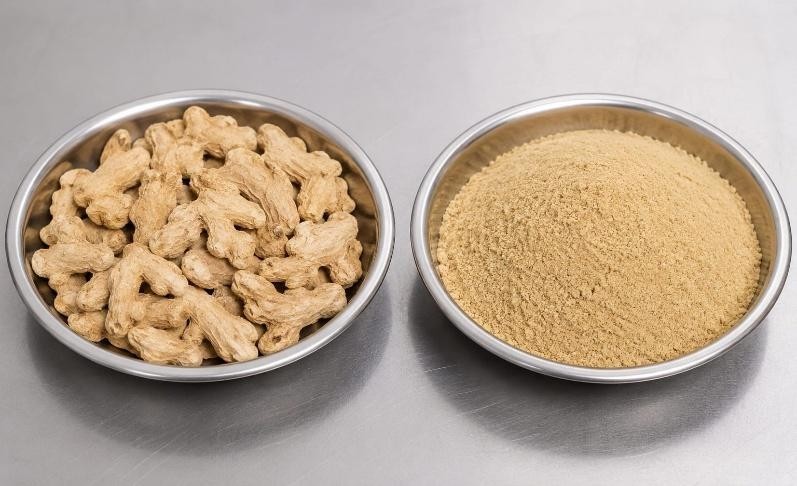
- Inspect thoroughly
- Remove outer skin
- Cut into suitable pieces before use
STEP 4: ACCURATE MEASUREMENT OF INGREDIENTS
- Measure each ingredient according to classical formulation
- Maintain correct proportions
- Ensure consistency between batches
STEP 5: PREPARATION OF COARSE POWDER (KWATHA CHOORNA)
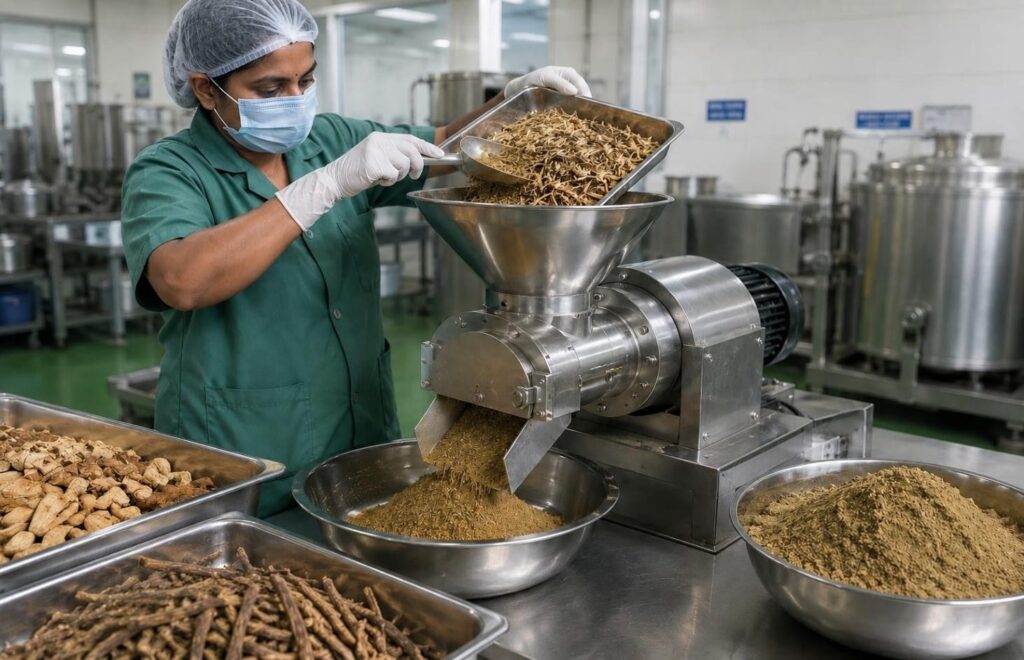
- Process herbs into coarse powder
- Facilitates proper extraction of active principles
- Improves filtration
- Supports classical decoction preparation
STEP 6: KWATHA KALPANA (DECOCTION PREPARATION)
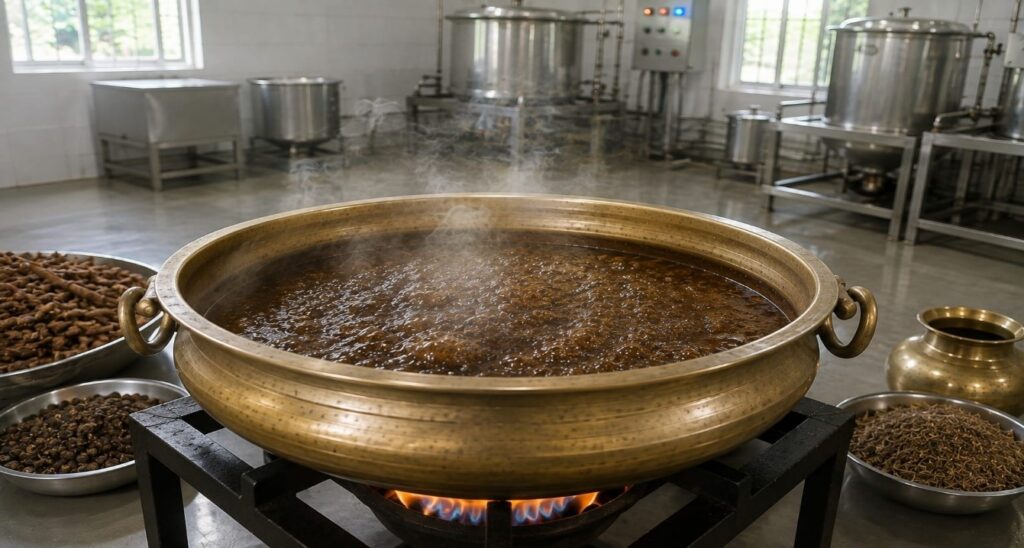
- Add measured herbal mixture to prescribed quantity of water
- Heat gradually
- Simmer under controlled conditions
- Stir periodically
- Reduce to classical prescribed concentration
- Monitor temperature and duration throughout
STEP 7: FILTRATION
- Filter through clean filtration materials
- Remove coarse herbal particles
- Inspect for clarity and uniformity
- Obtain a smooth decoction suitable for dispensing
STEP 8: QUALITY ASSESSMENT
- Evaluate appearance
- Check colour
- Assess characteristic aroma
- Verify consistency
- Confirm batch uniformity
- Approve batch for dispensing
STEP 9: HYGIENIC STORAGE
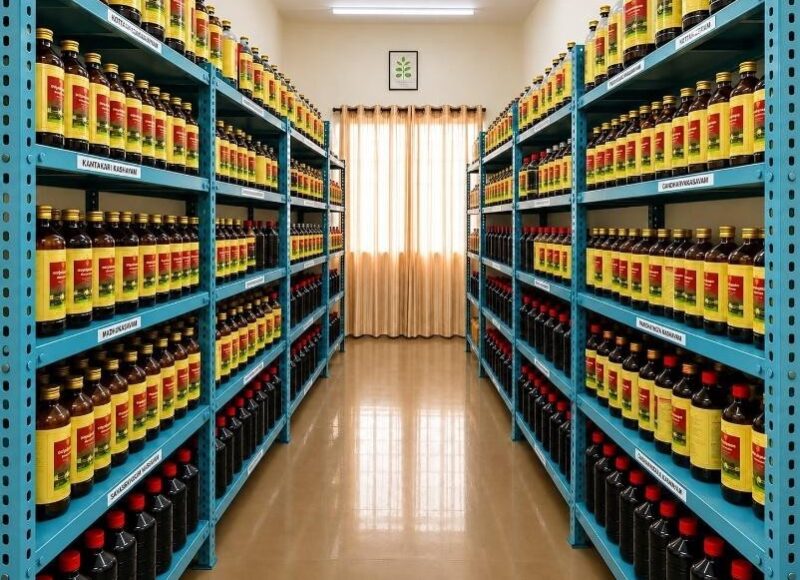
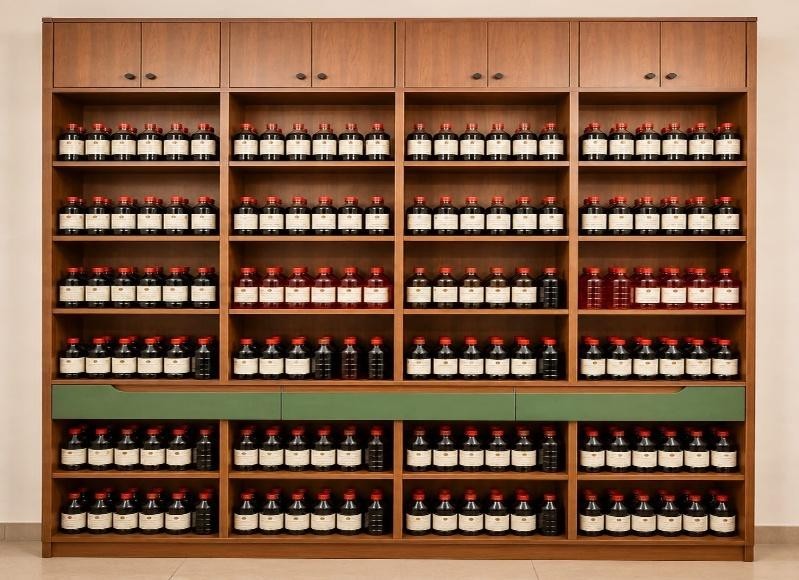
- Store Kashayam in clean, hygienic containers
- Maintain appropriate storage conditions
- Protect from contamination
- Preserve quality until physician-directed dispensing
Modern Scientific Evidence Behind Amruthotharam Kashayam
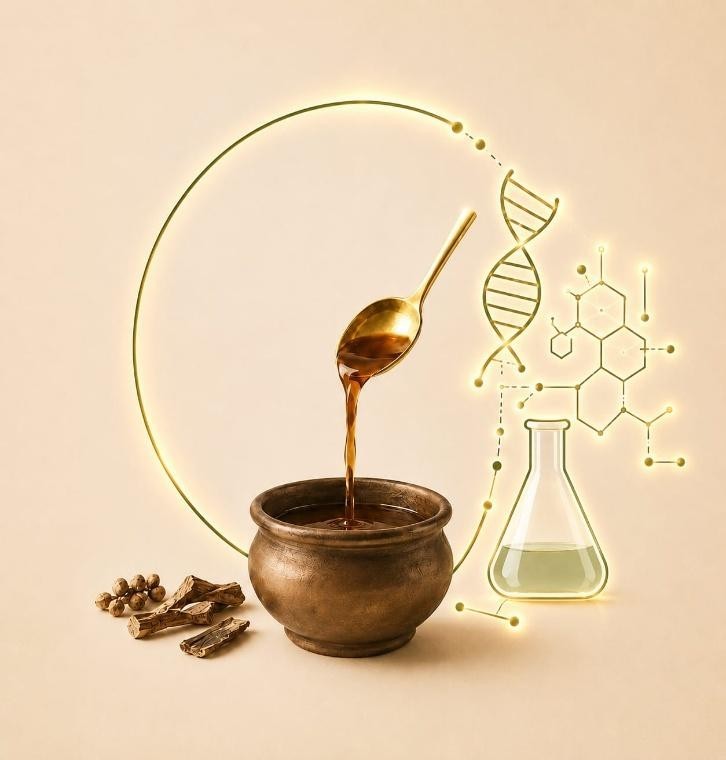
For centuries, Ayurvedic physicians have prescribed Amruthotharam Kashayam based on classical principles and clinical experience. Today, advances in scientific research are helping to explain many of the pharmacological properties of its ingredients. While more large-scale clinical trials are needed, existing laboratory and human studies provide encouraging evidence that complements Ayurveda’s traditional understanding.
It is important to note that Amruthotharam Kashayam should be used under the guidance of a qualified Ayurvedic physician, particularly in chronic conditions such as Rheumatoid Arthritis.
1. Modulation of Abnormal Immune Response
2. Reduction of Inflammatory Cytokines
3. Inhibition of Inflammatory Enzymes
4. Reduction of Oxidative Stress
5. Relief from Joint Pain and Stiffness
6. Prevention of Progressive Joint Damage
7. Improvement of Digestion and Reduction of Ama
8. Rasayana (Rejuvenate) and Tissue Support
9. Improvement of Gastrointestinal Health
10. Holistic Management of Rheumatoid Arthritis
Amruthotharam Kashayam is not intended to be a stand-alone solution. At our hospital, it forms part of an individualized treatment plan that includes:
- Detailed Ayurvedic Consultations
- Internal Herbal Medicines
- Panchakarma therapies (when clinically indicated)
- Personalized Dietary guidance
- Lifestyle Modifications
- Regular Physician Follow – up
Our philosophy is simple:
“Excellence in treatment begins with excellence in preparation.”
