

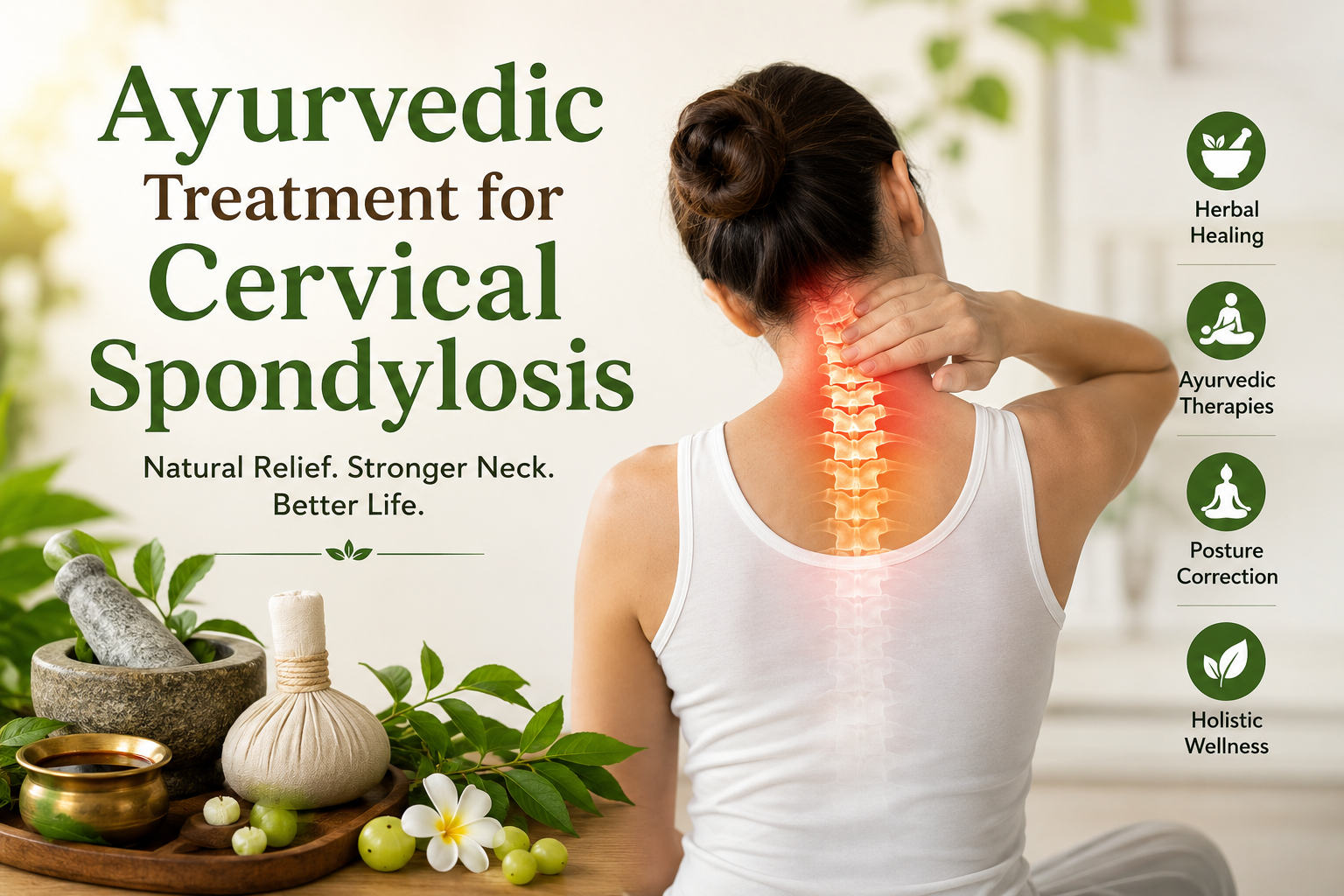
2Ayurvedic Treatment for Cervical Spondylosis
Neck stiffness that won’t go away, a dull ache that creeps into your shoulders by mid-afternoon, or the occasional tingling down your arm — if any of this sounds familiar, you may be dealing with cervical spondylosis, a degenerative condition of the neck’s spinal discs and joints that’s becoming increasingly common among people who spend long hours at a desk or looking down at a phone.
While painkillers and physiotherapy can offer temporary relief, many patients find the stiffness and pain keep returning. Ayurveda takes a different approach — treating the condition at the level of the joints, nerves, and tissue nourishment, rather than just managing the pain. Here’s how it works.
What Causes Cervical Spondylosis, Ayurvedically Speaking
In Ayurveda, cervical spondylosis is understood as a Vata-dominant condition, where the natural lubrication and nourishment of the cervical joints and discs gradually diminishes — often accelerated by poor posture, stress, and sedentary habits. This leads to stiffness, reduced joint space, and in more advanced cases, nerve compression that causes the tingling or numbness some patients experience in their arms and hands.
Core Therapies Used in Treatment
Greeva Vasti
Similar in concept to the Kativasthi therapy used for lower back pain, Greeva Vasti involves creating a small reservoir over the neck and shoulder region using dough, filled with warm medicated oil that’s left to soak into the joints and soft tissue. It’s one of the most effective localized therapies for reducing neck stiffness and nerve-related discomfort.
Njavarakizhi and Herbal Poultice Massage
Warm herbal poultices are massaged along the neck, shoulders, and upper back to relieve muscle tension, improve circulation, and reduce the inflammation that contributes to nerve compression.
Nasyam
Nasal administration of medicated oils is often included in cervical spondylosis programmes, as it’s traditionally used to clear and nourish the channels of the head and neck region. You can read more about this therapy on our Nasyam page.
How Treatment Is Structured
Cervical spondylosis programmes at SSANH are typically structured as in-patient care lasting 21 to 28 days, reflecting how gradually the underlying joint degeneration needs to be addressed. Every plan begins with a thorough consultation to assess severity — including whether any nerve compression is present — before a physician recommends the specific combination of therapies suited to your case.
As with our other specialty programmes, treatment often begins with a Panchakarma-based preparatory phase; you can read more about how this detox process supports deeper healing on our Panchakarma page.
Living With Cervical Spondylosis: What Helps Alongside Treatment
While in-patient therapy addresses the condition directly, physicians also guide patients on posture correction, targeted neck exercises, and ergonomic adjustments for desk-based work — since without these changes, symptoms can gradually return even after successful treatment.
Real Patient Outcomes
Cervical spondylosis is one of our most frequently treated conditions, with thousands of cases managed successfully over the past decade. If you’d like to hear directly from patients who’ve completed treatment for neck and spine-related conditions, our Testimonials page includes video accounts covering a range of similar cases, including international patients.
Ready to Address the Root Cause?
If chronic neck pain and stiffness have become a daily struggle, ayurvedic treatment for cervical spondylosis may offer the lasting relief that painkillers and short-term physiotherapy haven’t. Book a consultation with our physicians to find out if it’s the right approach for you.
