

Treated Physician: Dr. Sanand Ratnam, MD(Ayu),
CMO, Sree Subramania Ayurvedic Nursing Home
Dr, Sinooja, BAMS
RMO, SSANH Annex
Introduction
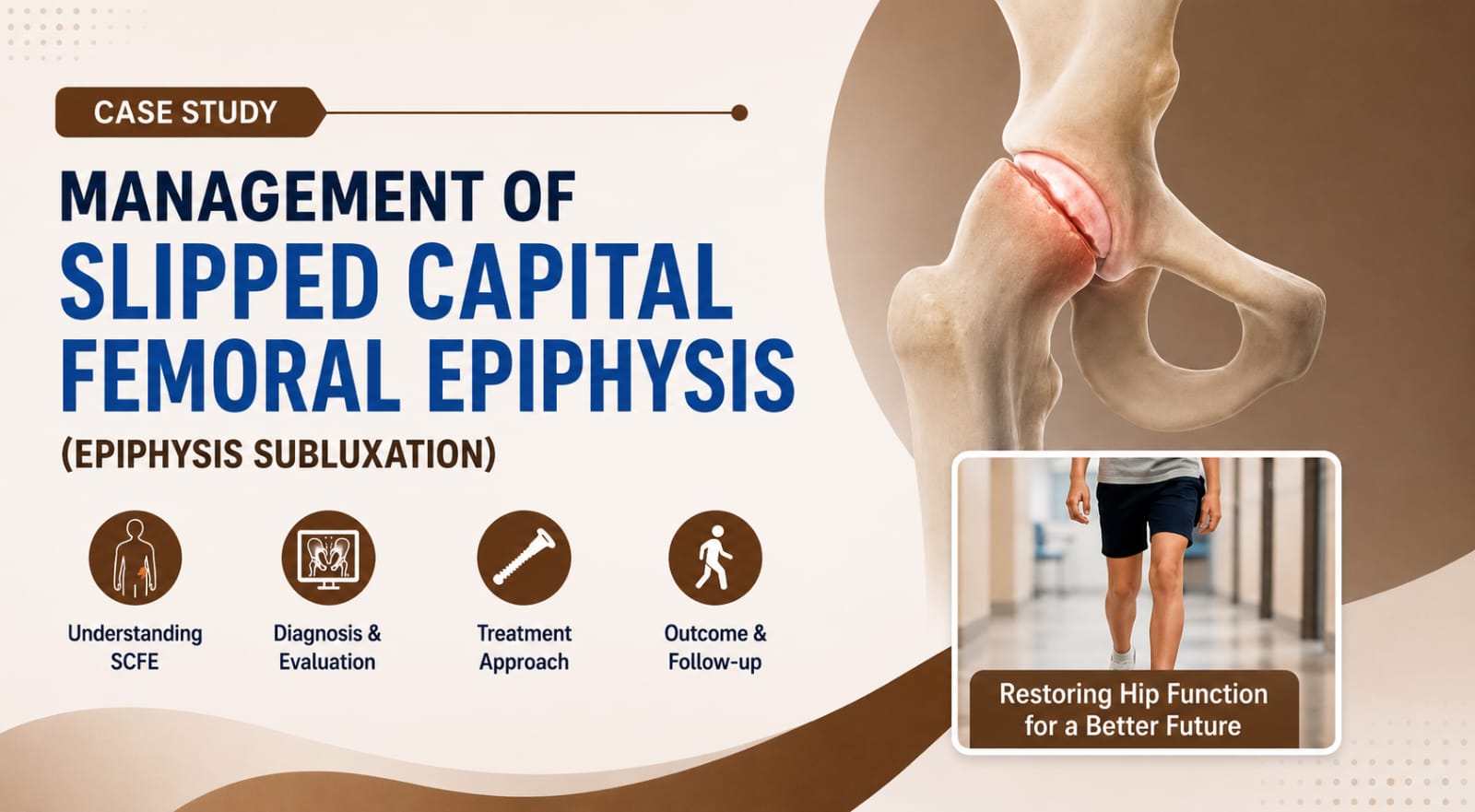
Slipped Capital Femoral Epiphysis (SCFE), also known as epiphyseal subluxation, is an orthopaedic condition characterized by the displacement of the femoral head (capital femoral epiphysis) relative to the femoral neck through the growth plate (physis). It is one of the most common hip disorders affecting children and adolescents, particularly during periods of rapid skeletal growth.
SCFE can lead to progressive hip deformity, gait abnormalities, chronic pain, restricted mobility, and long-term complications such as osteoarthritis if not managed appropriately.
Common Clinical Features
- Hip pain, groin pain, or thigh pain
- Limping gait
- Restricted range of motion of the hip
- Difficulty in walking and weight-bearing
- Stiffness of the hip joint
- External rotation deformity
- Reduced physical activity
- Swelling and tenderness around the affected joint
- Progressive functional limitation
Etiological Factors and Risk Factors
- Obesity and increased body mass index
- Trauma or minor repetitive stress injury
- Rapid growth during adolescence
- Endocrine disorders (hypothyroidism, growth hormone abnormalities)
- Metabolic bone diseases
- Genetic predisposition
- Mechanical instability of the growth plate
- Developmental skeletal abnormalities
- Hormonal imbalance affecting physeal strength
Conventional Management
Management depends on the severity and stability of the slip and may include:
- Strict non-weight-bearing
- Activity modification
- Physiotherapy and rehabilitation
- Pain management
- Surgical stabilization (In-situ fixation)
- Long-term orthopedic follow-up
Patient Profile
Patient Name: Angelo Siji
Age: 12 Years
Gender: Male
Chief Complaints
- Pain in the left hip joint for 2 months
- Sudden onset of symptoms
- Pain radiating to the left thigh and groin region
- Limping while walking
- Difficulty in ambulation
- Aggravation of pain during physical activities and weight-bearing
History of Present Illness
A 12-year-old male child presented with complaints of persistent pain in the left hip joint associated with difficulty in movement for the past two months. The symptoms had a sudden onset and progressively interfered with daily activities.
The pain radiated to the thigh and groin region and was associated with limping while walking. The patient experienced increased discomfort during walking, running, prolonged standing, and weight-bearing activities. Partial relief was obtained with rest and analgesic medications.
There was no history of significant trauma, fever, loss of appetite, weight loss, recent infection, or previous similar episodes.
The patient underwent orthopaedic evaluation at a tertiary care allopathic hospital. Clinical examination and radiological investigations confirmed the diagnosis of Left-Sided Slipped Capital Femoral Epiphysis (SCFE). Surgical management in the form of in-situ fixation along with strict non-weight-bearing was advised.
However, the parents were reluctant to proceed with surgical intervention and subsequently approached our institution for comprehensive Ayurvedic evaluation and conservative management.
Clinical Examination
Vital Parameters
Parameter Findings
Blood Pressure 120/80 mmHg
Pulse Rate 70/min
Temperature 97°F
Respiratory Status Stable
General Examination
- Conscious, cooperative, and well-oriented
- Moderately built and overweight adolescent
- Pallor – Absent
- Icterus – Absent
- Cyanosis – Absent
- Clubbing – Absent
- Generalized lymphadenopathy – Absent
- Pedal edema – Absent
- Nutritional status – Adequate
- Gait – Antalgic gait with limping
Local Examination of Left Hip
Inspection
- Restricted movements of the left hip joint
- Painful internal rotation
- Mild fullness/swelling around the affected hip region
- Functional limitation during movement
- No visible deformity
- No skin discoloration, scars, or wounds
Palpation
- Localized tenderness over the left hip and epiphyseal region
- Mild increase in local temperature
- Pain aggravated on movement
- Pain during weight-bearing activities
- Muscle guarding present around the affected joint
Provisional Diagnosis
Left-Sided Slipped Capital Femoral Epiphysis (SCFE) / Epiphyseal Subluxation
ROM (Range of Movement)
- Restricted active and passive movements.
- Pain aggravated during movement.
Left hip:
- Internal Rotation (IR): 0°
- Fixed External Rotation: 20°
- Flexion painful
Functional Assessment
- Difficulty in walking and standing for prolonged periods.
- Reduced participation in physical activities.
- Limp present during gait examination.
Personal History
- Appetite – Normal
- Bowel – Satisfied
- Sleep – Satisfied
- Micturition – Normal
Family History
No hereditary bone disorders reported.
Investigations
MRI Pelvis
- Mild thickening of the growth plate of the left proximal femur with adjacent minimal to mild marrow edema.
- Mild to moderate joint effusion and synovitis
Laboratory Investigations
- ASO: 1890 IU/ml
- ESR: 19 mm/hr (High)
OUR TREATMENT AND INTERNAL MEDICINE:
| DATE | INTERNAL MEDICINE | EXTERNAL TREATMENT |
|---|---|---|
| 30/4/26 to 8/5/26 | Dashamoolakatuthraya kashaya (60 ml BD before food) Nimbamruthadi eranda taila capsule(2BD with Hotwater) Vajraka bhasma(1 packet BD with honey,ginger and lemon juice after food) Gopichandanadi gulika(2 tab BD with hotwater after food) |
Dhanyamla dhara Theppu-Grihadhoomadi Choorna vasti-with 5 g shuntyadi choorna(for 5 days) |
| 9/5/26 to 10/5/26 | Dashamoolakatuthraya kashaya (60 ml BD before food) Nimbamruthadi eranda taila capsule(2 OD with Hotwater) Vajraka bhasma(1 packet BD with honey,ginger and lemon juice after food) Gopichandanadi gulika(2 tab BD with ginger mango juice after food) |
Dhanyamla dhara Theppu-Grihadhoomadi |
| 11/5/26 to 18/5/26 | Nirgundyadi Kashaya(60 ml BD before food) Nimbamruthadi eranda taila capsule(2 OD with Hotwater) Vajraka bhasma(1 packet BD with honey,ginger and lemon juice after food) Gopichandanadi gulika(2 tab BD with ginger mango juice after food) |
Dhanyamla dhara Theppu-Grihadhoomadi |
| 19/5/26 to 21/5/26 | Nirgundyadi Kashaya(60 ml BD before food) Nimbamruthadi eranda taila capsule(2 OD with Hotwater)Vajraka bhasma(1 packet BD with honey,ginger and lemon juice after food) Gopichandanadi gulika(2 tab BD with ginger mango juice after food) |
Rasna aswaganda choorna kizhi+Abhyanga(Each 20 minutes) Theppu-Grihadhoomadi |
Discharge Medicine
| Sl. No. | Name of Medicine | Dosage |
|---|---|---|
| 1 | Dashamoolakatutraya Kashaya | 60 ml BD before food |
| 2 | Vajraka Bhasma | 1 packet BD with 1 teaspoon honey,lemon and ginger juice after food |
| 3 | Pippalyasava + Punarnavasava | 25 ml BD after food |
| 4 | Dashamoola Haritaki | 1 teaspoon at night |
| 5 | Gopichandanadi Gulika | 2 BD with mango ginger juice after food |
Clinical Outcome
- Marked reduction in pain and radiating symptoms.
- Improved mobility.
- Limping reduced.
Conclusion
After completion of the Panchakarma course and internal medication, the patient showed significant symptomatic improvement in pain and walking stability.
