

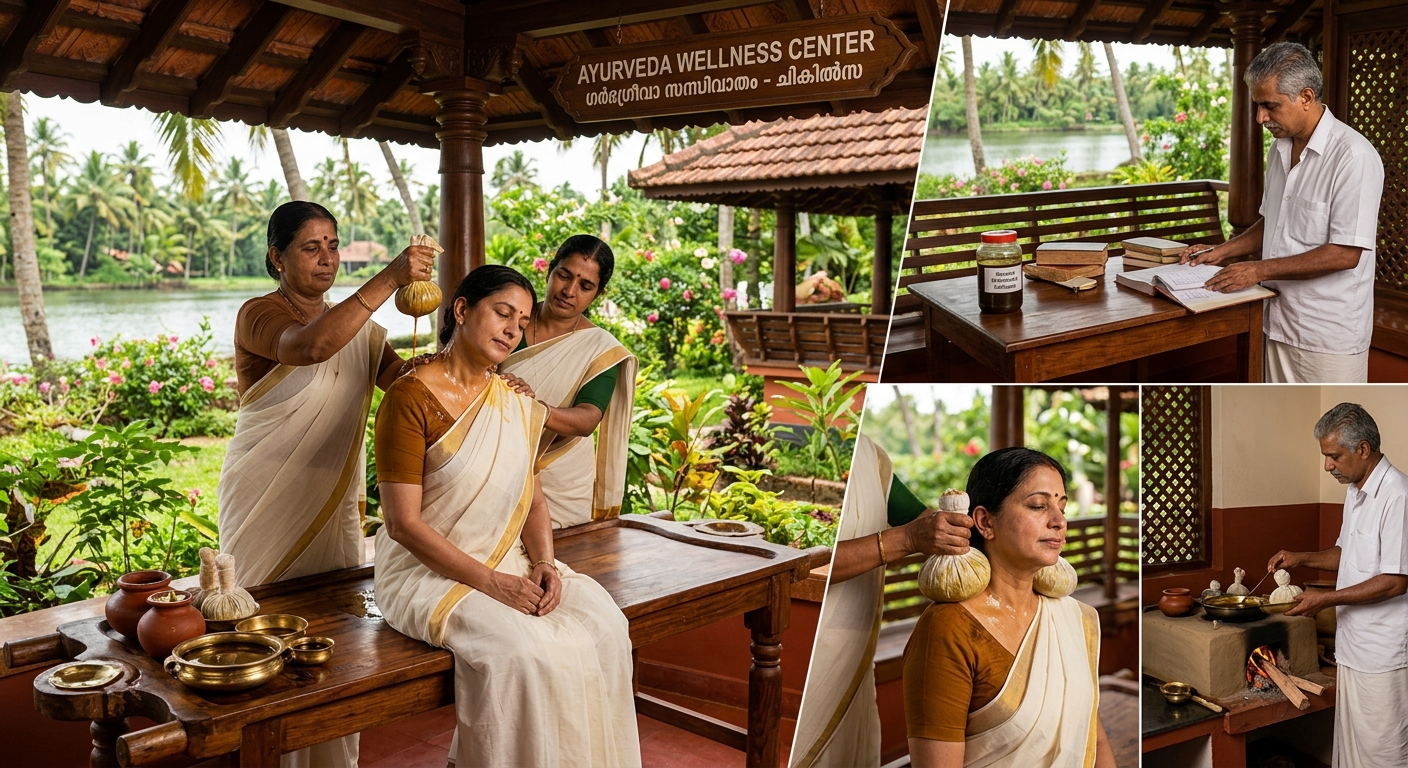
Cervical Spondylosis Ayurvedic Treatment: Easing Neck and Upper Spine Pain
How Ayurveda understands cervical spondylosis, which therapies may help and what lifestyle changes support recovery
Neck pain has become a common complaint in an age of long hours at desks and screens. For many people, it is not just a passing stiffness. Over time, the bones and discs of the neck can wear, a condition known as cervical spondylosis. Pain, stiffness, tingling in the arms and headaches can follow, which leads many to explore cervical spondylosis Ayurvedic treatment.
Sree Subramania Ayurvedic Nursing Home in Calicut, Kerala, lists cervical spondylosis among its main areas of care. This guide explains how Ayurveda approaches the condition and what to expect. It is general information, and results vary. Any severe symptoms need prompt medical attention.
What Is Cervical Spondylosis?
Cervical spondylosis refers to age-related wear of the discs and joints in the neck. It is very common after middle age, but poor posture, long periods of screen work and previous injuries can bring it on earlier. Bony changes may press on nearby nerves, causing pain that spreads to the shoulders and arms.
Typical symptoms include neck pain and stiffness, headaches that start at the back of the head, tingling or numbness in the arms and hands and reduced neck movement. In a few cases, pressure on the spinal cord causes more serious problems.
Warning Signs That Need Urgent Care
Seek immediate medical help if you notice:
- Sudden weakness in the arms or legs.
- Difficulty walking or loss of balance.
- Loss of control of bladder or bowel.
- Severe pain after a fall or injury.
Conditions such as cervical myelopathy, in which the spinal cord is affected, need careful medical assessment. Ayurvedic care may be considered only after proper evaluation.
The Ayurvedic Approach
In Ayurveda, degenerative conditions of the spine are connected with vata. Dryness, wear and loss of lubrication in the tissues are seen as signs of vata imbalance. The traditional name for neck conditions of this kind is manyastambha or greeva graha, and treatment aims to calm vata, nourish the tissues and improve movement.
As in other conditions, the plan is individual. The doctor considers your history, your lifestyle and the severity of symptoms before choosing therapies.
Therapies for Neck and Spine Care
A treatment programme may include:
- Abhyanga: warm medicated oil massage to ease muscle tension.
- [[Sirovasthi|sirovasthi]]: a leather cap is placed on the head and filled with warm medicated oil, which is retained for a period of time. It is commonly used for head, neck and stress-related problems.
- [[Njavarakizhi|njavarakizhi]]: a warm bolus of medicated rice is used to nourish and strengthen tissues.
- Greevavasthi: warm oil is retained over the neck region.
- Nasyam: medicated oils are administered through the nose, traditionally used for the neck, head and shoulders.
The hospital’s pain management pages show how these therapies are organised.
Medicines and Diet
Herbal medicines are given to support the nervous system, reduce stiffness and strengthen the spine. Medicated oils may be applied at home as advised. Diet usually favours warm, nourishing and easily digested food, and avoids cold or dry foods that may aggravate vata.
Your doctor may also suggest gentle exercises. These should be learned with guidance, not copied from the internet, since the wrong movement can worsen neck pain.
Everyday Habits for a Healthy Neck
Treatment works better when daily habits help:
- Keep screens at eye level and take breaks every 30 minutes.
- Use a supportive pillow that keeps your neck in a neutral position.
- Avoid carrying heavy bags on one shoulder.
- Avoid sleeping on your stomach.
- Stay active with gentle walking.
Cervical Spondylosis and Related Conditions
Neck problems are often connected with other conditions, such as lumbar disc problems, frozen shoulder and headaches. Hospital case studies include cervical myelopathy, frozen shoulder and lumbar disc bulge. You can see them on the case studies page.
Screen Time and Modern Neck Problems
Many cases of neck pain today are linked to long hours on laptops and phones. Looking down puts strain on the neck, and repeated strain can contribute to stiffness and early wear. Simple changes, such as raising your screen, taking breaks and stretching gently, reduce the load. Ayurvedic treatment is more effective when work habits are corrected.
Headaches and Shoulder Pain
Cervical spondylosis often causes headaches at the back of the head and pain around the shoulders. Some patients also develop frozen shoulder, in which the joint becomes stiff and painful. These conditions may share causes with neck problems, so the doctor examines the neck, shoulders and upper back together. Treatment may therefore include therapies for the shoulder as well.
What Recovery Looks Like
Recovery varies. Some people feel less stiffness within days, while others need longer care. Gradual improvement in neck movement, reduced pain and better sleep are common goals. Your doctor will track progress and adjust therapies. Follow-up and home care are essential, because the neck will continue to be used in daily life.
Choosing a Hospital for Spine Care
Look for doctors who examine the whole spine, therapists trained in oil therapies and a pharmacy that supplies quality medicines. Ask whether scans are reviewed and whether referral to other specialists is possible. At Sree Subramania, the hospital lists back pain, cervical spondylosis, lumbar disc bulge and cervical myelopathy among the conditions seen. Doctors conduct rounds twice a day, and a doctor is on call all hours.
Questions to Ask Before Starting
Consider asking your doctor:
- Do my scans show nerve or spinal cord pressure?
- Which therapies are safest for my condition?
- Are there movements I should avoid?
- How long should I expect treatment to take?
- When should I seek urgent help?
Good answers help you make informed decisions and feel more confident during treatment.
Finally, remember that neck pain often reflects daily habits as much as age. Treatment can relieve symptoms, but lasting benefit comes from changing how you work, sit and sleep. Ask your doctor for a simple home routine, and review it at follow-up so that you continue to improve once you return to normal life.
Sleep, Pillow and Posture
Many people wake with a stiff neck because of poor sleeping position. A pillow that is too high or too low strains the neck, and sleeping on the stomach twists it. Aim for a pillow that keeps your head in line with your spine. During the day, sit with your back supported and your feet on the floor. Small changes like these reduce strain on the cervical spine and make treatment more effective.
Cervical Spondylosis FAQs
Can Ayurveda reverse cervical spondylosis? Wear of the spine cannot be reversed, but Ayurvedic care aims to relieve symptoms and support function. Results vary.
Is Sirovasthi safe? When performed by trained therapists under a doctor’s supervision, it is generally considered safe.
Should I keep taking painkillers? Follow your doctor’s advice and do not stop prescribed medicines on your own.
Book a Consultation for Neck Care
If you are considering cervical spondylosis Ayurvedic treatment, Sree Subramania Ayurvedic Nursing Home is ready to help. Call +91-7594003003 to book a consultation, or visit the contact page.
