

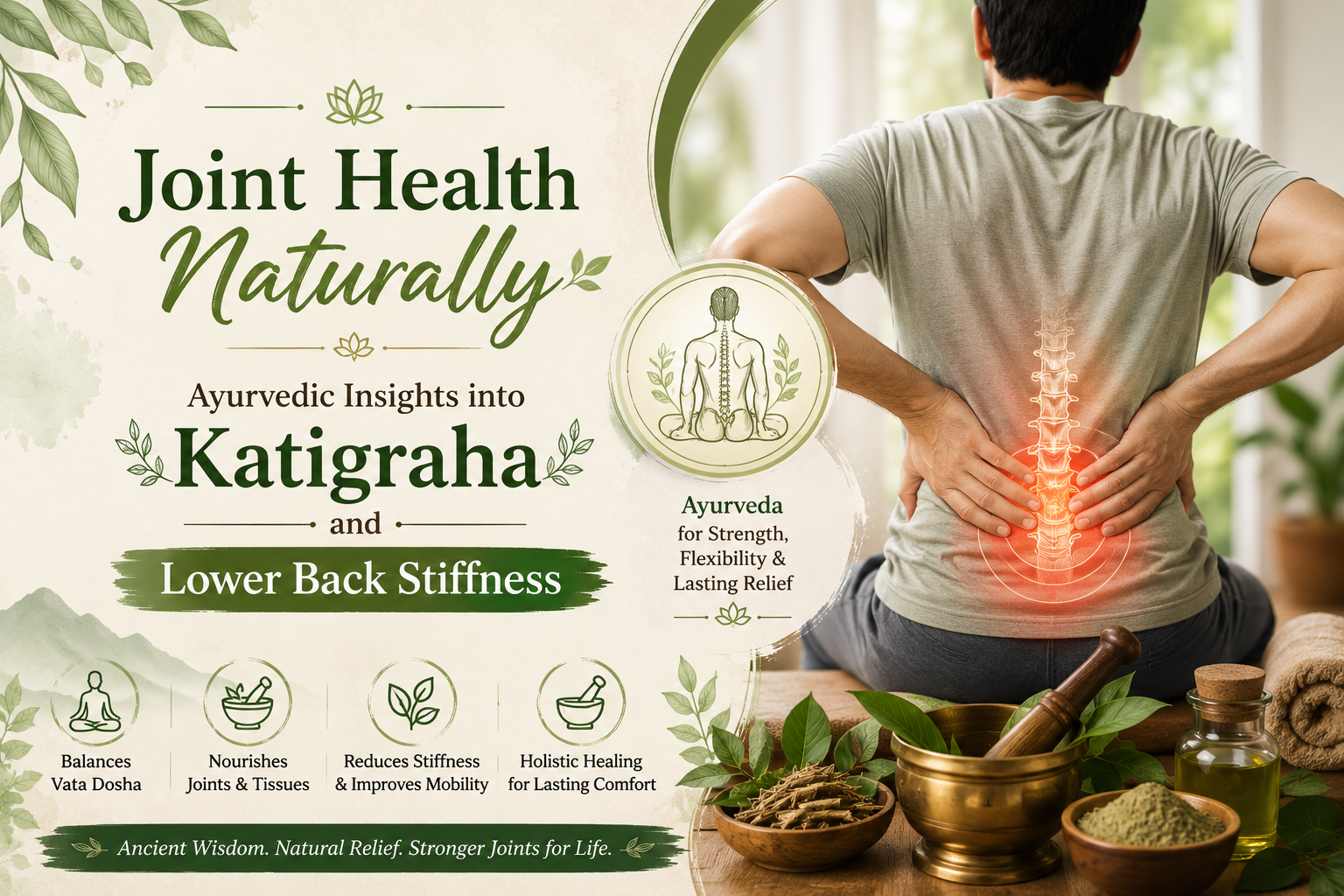
Lower back stiffness is a common health concern affecting people of all ages. Whether caused by long hours of sitting, poor posture, physical strain, aging, or lifestyle habits, persistent stiffness in the lower back can interfere with daily activities and reduce overall quality of life. While conventional treatments often focus on symptom management, Ayurveda offers a holistic approach that addresses the root causes of discomfort and promotes long-term joint health.
In Ayurvedic medicine, lower back stiffness is often associated with Katigraha, a condition characterized by pain, rigidity, and restricted movement in the lumbar region. Katigraha primarily arises from an imbalance of Vata Dosha, the biological energy responsible for movement, flexibility, and nervous system functions. Understanding Katigraha through the Ayurvedic lens can provide valuable insights into managing lower back stiffness naturally and effectively.
Understanding Katigraha in Ayurveda
The term “Katigraha” is derived from two Sanskrit words: Kati (lower back) and Graha (stiffness or restriction). According to Ayurvedic texts, Katigraha occurs when aggravated Vata accumulates in the lower back region, leading to dryness, rigidity, pain, and reduced mobility.
Several factors can contribute to Vata aggravation, including:
- Excessive physical exertion
- Sedentary lifestyle
- Irregular eating habits
- Stress and anxiety
- Aging
- Exposure to cold and dry environments
- Inadequate sleep
When Vata becomes imbalanced, it affects the muscles, joints, ligaments, and connective tissues surrounding the spine, resulting in stiffness and discomfort.
Common Symptoms of Katigraha
Individuals experiencing Katigraha may notice symptoms such as:
- Persistent lower back stiffness
- Difficulty bending or twisting
- Pain during movement
- Muscle tightness in the lumbar region
- Reduced flexibility
- Discomfort after prolonged sitting or standing
- Occasional radiating pain to the hips or thighs
If left unmanaged, these symptoms can gradually worsen and impact overall mobility and daily functioning.
Ayurveda’s Holistic Approach to Joint Health
Ayurveda focuses on restoring balance rather than simply masking symptoms. The management of Katharina typically involves a combination of dietary adjustments, herbal remedies, therapeutic treatments, and lifestyle modifications designed to pacify aggravated Vata and nourish the musculoskeletal system.
1. Herbal Support for Joint Wellness
Several Ayurvedic herbs are traditionally used to support joint health and flexibility. These herbs may help reduce stiffness, improve circulation, and nourish tissues.
Commonly used herbs include:
- Ashwagandha
- Guggulu
- Shallaki (Boswellia)
- Rasna
- Nirgundi
- Bala
These herbs are often incorporated into personalized treatment plans based on an individual’s constitution and health condition.
2. Therapeutic Oil Applications
Oil therapies play an important role in Ayurvedic care for Katigraha. Warm medicated oils help counteract the dry and rough qualities of aggravated Vata.
Popular therapies include:
Abhyanga (Therapeutic Oil Massage):
A full-body massage using herbal oils that promotes circulation, relaxation, and joint lubrication.
Kati Basti:
A specialized treatment in which warm medicated oil is retained over the lower back for a specific period. This therapy helps soothe stiffness, nourish tissues, and support flexibility.
3. Panchakarma Detoxification
In chronic cases, Ayurvedic practitioners may recommend Panchakarma therapies to remove accumulated toxins (Ama) and restore doshic balance.
Treatments may include:
- Basti (medicated enemas)
- Swedana (herbal steam therapy)
- Virechana (therapeutic cleansing)
These therapies are administered under professional supervision and are customized according to the individual’s needs.
Dietary Recommendations for Lower Back Health
Ayurveda emphasizes nutrition as a key component of healing. For individuals with Vata-related stiffness, warm, nourishing, and easily digestible foods are generally recommended.
Foods That Support Joint Health
- Warm soups and stews
- Cooked vegetables
- Whole grains
- Ghee in moderation
- Soaked nuts and seeds
- Herbal teas
- Fresh seasonal fruits
Foods to Limit
- Excessively cold foods
- Processed snacks
- Dry and stale foods
- Carbonated beverages
- Excess caffeine
- Refined sugars
Maintaining proper hydration is also essential for supporting joint function and flexibility.
Lifestyle Practices to Reduce Stiffness
Small daily habits can significantly influence spinal health and mobility. Ayurveda encourages routines that promote balance and prevent Vata aggravation.
Gentle Exercise
Low-impact activities can help maintain flexibility and strengthen supporting muscles.
Beneficial practices include:
- Yoga
- Walking
- Stretching exercises
- Swimming
- Mobility-focused workouts
Specific yoga poses such as Cat-Cow Stretch, Child’s Pose, Cobra Pose, and Bridge Pose may help improve lower back flexibility when practiced correctly.
Stress Management
Mental stress can contribute to muscle tension and worsen physical discomfort. Ayurveda recommends practices such as:
- Meditation
- Deep breathing exercises
- Mindfulness techniques
- Adequate rest and sleep
These practices help calm the nervous system and support overall well-being.
Maintain Proper Posture
Poor posture places unnecessary strain on the spine. Whether working at a desk or performing daily activities, maintaining proper alignment can help reduce stiffness and prevent future discomfort.
The Importance of Early Intervention
Addressing lower back stiffness in its early stages can help prevent chronic pain and mobility issues. Ayurveda emphasizes proactive care by identifying imbalances before they develop into more serious conditions. Through personalized therapies, balanced nutrition, and healthy lifestyle practices, individuals can support long-term spinal health and maintain an active, comfortable lifestyle.
Katigraha represents Ayurveda’s understanding of lower back stiffness and restricted movement resulting primarily from Vata imbalance. By focusing on the root causes of discomfort, Ayurveda offers a comprehensive and natural approach to improving joint health, enhancing flexibility, and supporting overall wellness.
Through herbal support, therapeutic treatments, mindful nutrition, and healthy daily routines, individuals can take meaningful steps toward reducing stiffness and promoting lasting lower back comfort. Embracing Ayurvedic principles not only helps manage symptoms but also encourages a balanced lifestyle that supports strength, mobility, and vitality for years to come.
