

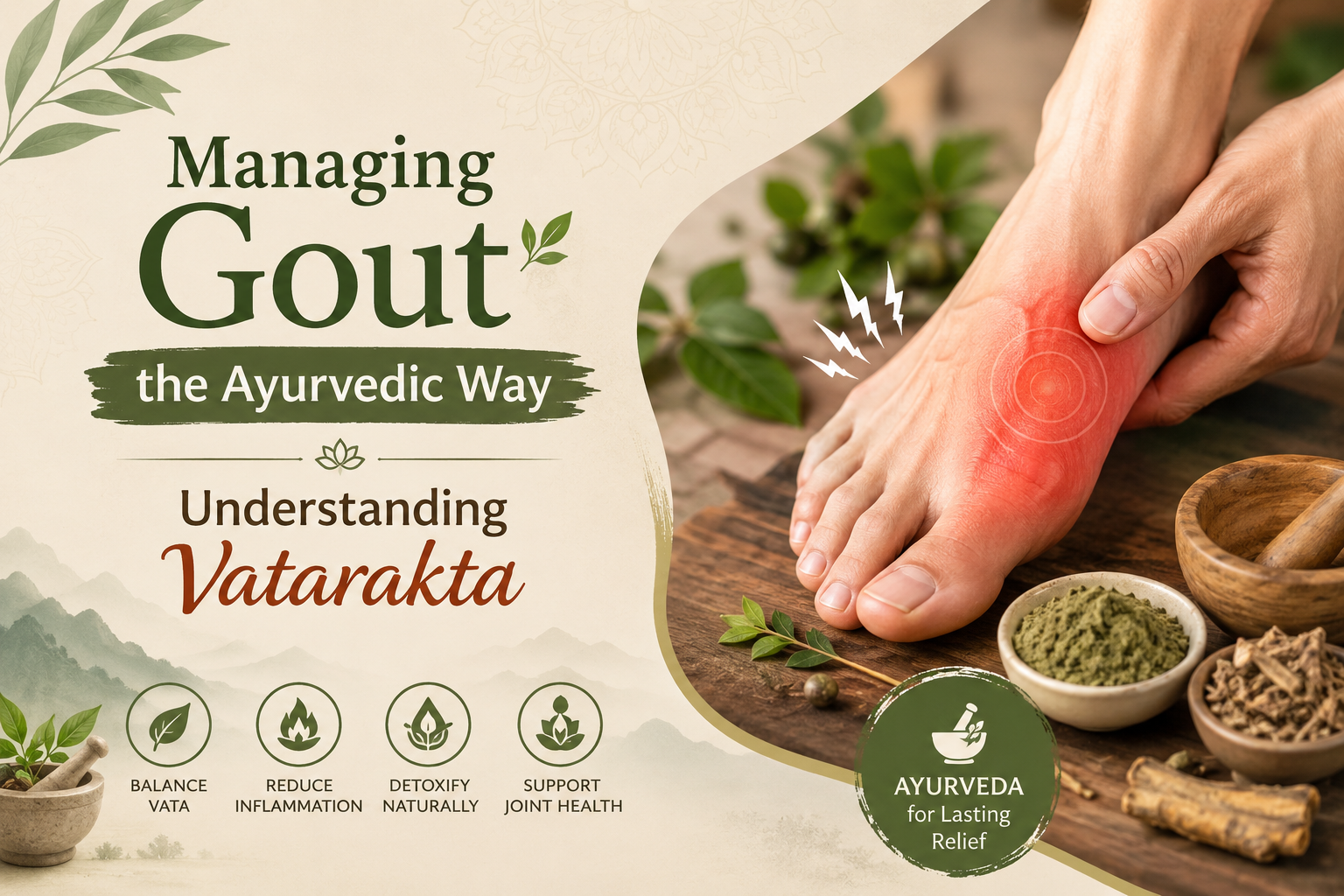
Gout is a painful form of arthritis caused by the accumulation of uric acid crystals in the joints, often affecting the big toe, ankles, and feet. In Ayurveda, this condition closely resembles Vatarakta, a disorder resulting from the vitiation of Vata Dosha and Rakta Dhatu (blood tissue).
What Causes Vatarakta?
According to Ayurveda, Vatarakta develops when unhealthy dietary habits, sedentary lifestyles, excessive alcohol consumption, and stress disturb the balance of Vata and contaminate the blood. This leads to pain, inflammation, and restricted movement in the joints.
Common Symptoms
- Sudden, intense joint pain
- Redness and swelling
- Burning sensation around affected joints
- Stiffness and difficulty moving
- Recurring flare-ups
Ayurvedic Management Strategies
1. Dietary Modifications
- Favor light, easily digestible foods
- Increase fresh vegetables and fruits
- Stay hydrated
- Reduce red meat, alcohol, and processed foods
2. Herbal Support
Traditional Ayurvedic herbs commonly used include:
- Guduchi
- Manjistha
- Gokshura
- Triphala
3. Panchakarma Therapies
Detoxification procedures may help remove accumulated toxins and restore balance.
4. Lifestyle Practices
- Gentle yoga and stretching
- Regular sleep schedule
- Stress management through meditation
Ayurveda approaches gout holistically by addressing the root imbalance rather than merely suppressing symptoms. Personalized treatment under qualified Ayurvedic guidance can help improve joint health and overall well-being.
