

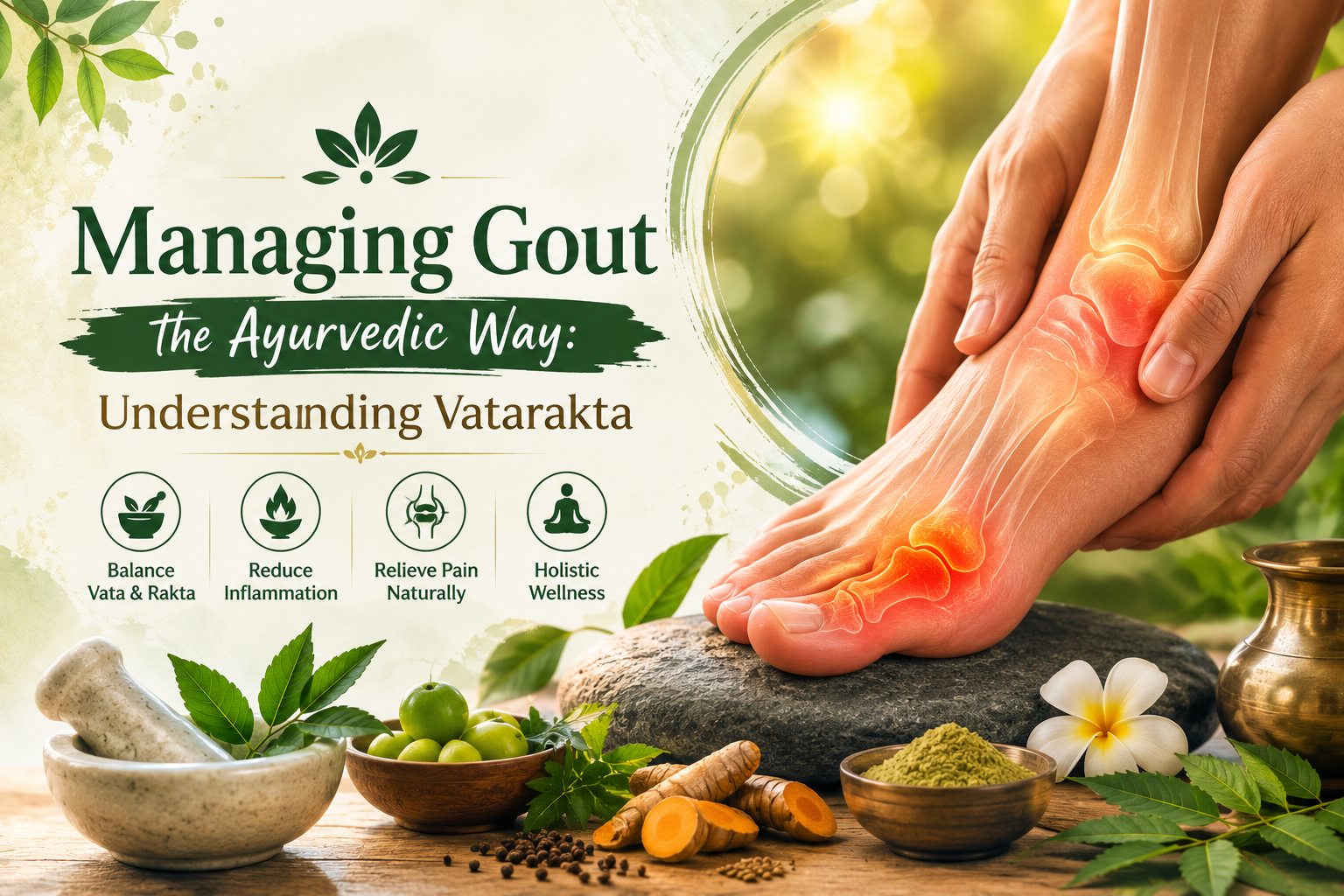
A gout attack rarely gives warning. Often it strikes at night, with a single joint, classically the big toe, turning red, hot and so tender that even a bedsheet feels unbearable. Ayurveda described this pattern long ago under the name Vatarakta, a disorder where aggravated Vata becomes entangled with vitiated blood, or Rakta.
Why the blood is involved
The name Vatarakta places the blood at the centre of the problem, and this matches what we now understand about gout. Rich, sour, salty and fermented foods, along with alcohol and an indulgent lifestyle, are said to vitiate the blood over time. When this impure Rakta combines with mobile, erratic Vata, the two obstruct each other in the smaller joints and the searing pain of a flare begins. The hands and feet are affected first because that is where Vata and blood meet at the body’s extremities.
Cooling an overheated system
Treatment works on two fronts at once: pacifying Vata while cleansing and cooling the blood. Therapeutic purgation, or Virechana, is often used to clear excess heat from the system. In selected cases, classical texts also describe controlled bloodletting, known as Raktamokshana, to relieve the load of vitiated blood, always under careful physician supervision.
Cooling herbs valued for purifying the blood are used internally, frequently alongside Guggulu-based formulations. External applications of cooling pastes and medicated oils help settle the inflammation in an affected joint. The overall direction is to bring down heat rather than add to it, which is why warming therapies suited to dry Vata conditions are used cautiously here.
The role of diet
Diet does much of the long-term work in gout, and this is where patients have the most control. Reducing sour, salty, fermented and excessively rich foods, cutting back sharply on alcohol, and favouring fresh, light and cooling meals all help keep the blood from becoming vitiated again. Adequate water through the day supports the body in flushing out what it does not need.
Breaking the cycle of flares
Because gout tends to return, the goal of Ayurvedic care is to lengthen the gaps between attacks and lessen their intensity, while steadily improving the underlying state of the blood. With consistent treatment and an honest look at daily habits, many people find their flares become both rarer and milder.
To consult our physicians about gout or recurring joint flares, call Sree Subramania Ayurvedic Nursing Home on +91 7594003003 or +91 70340 61009, or visit us in Calicut, Kerala.
