
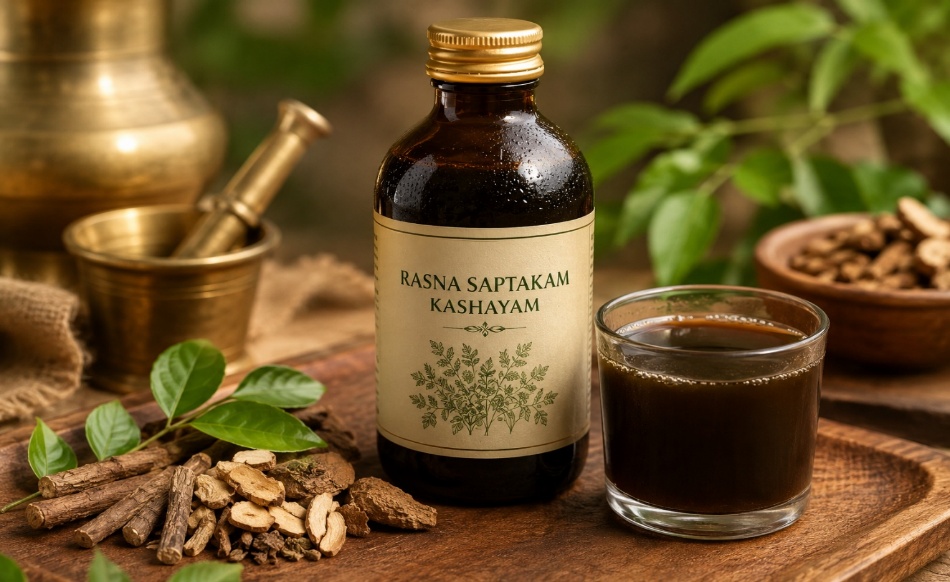
Rasnasaptakam Kashayam is a classical polyherbal Ayurvedic decoction traditionally used in the management of joint pain, stiffness, swelling, and other Vata-related musculoskeletal conditions.
Ayurvedic perspective
The source describes conditions resembling Rheumatoid Arthritis (RA) through the concept of Amavata, involving impaired digestion and metabolism (Agni), accumulation of Ama, and imbalance of Vata Dosha. Ayurvedic management therefore emphasizes internal balance, healthy digestion, and support for associated symptoms.
What this condensed guide covers
- Classical ingredients and their traditional roles
- Preparation from raw-herb selection to hygienic storage
- Quality practices followed at Sree Subramania Ayurvedic Hospital
- Modern scientific insights and the formulation’s broader musculoskeletal significance
The formulation’s therapeutic potential is presented in the source as arising from the combined action of its selected medicinal herbs and naturally occurring phytoconstituents.
Why Rasnasaptakam Kashayam Matters for Rheumatoid Arthritis
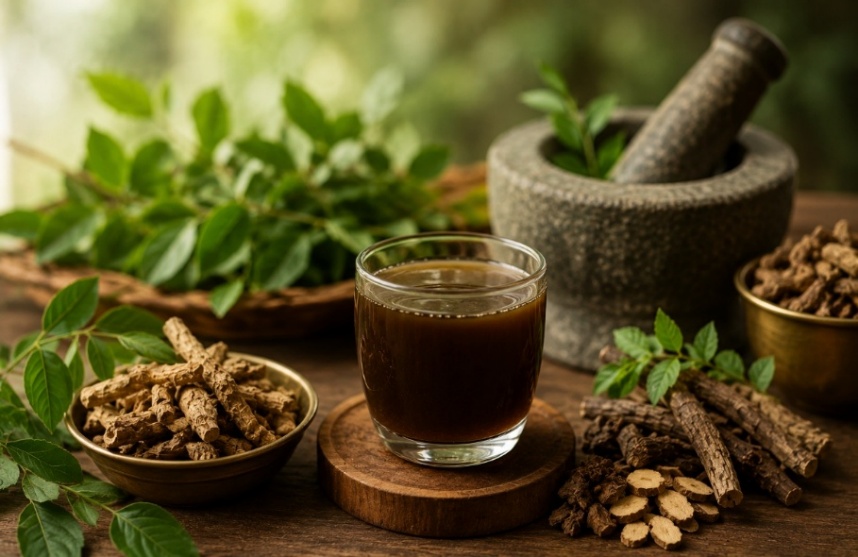
At Sree Subramania Ayurvedic Hospital, Rasnasaptakam Kashayam is prepared according to classical Ayurvedic principles of Kwatha Kalpana (decoction preparation), with attention to authenticity, hygiene, consistency, and quality.
Traditional role
It is traditionally prescribed to support the management of Vata-related musculoskeletal disorders and is used as part of a holistic Ayurvedic treatment plan to promote joint comfort, flexibility, mobility, and overall musculoskeletal well-being.
It may help by
- Supporting healthy joint function and flexibility
- Helping reduce joint pain and stiffness
- Supporting balanced inflammatory responses
- Supporting muscles, ligaments, and connective tissues
- Promoting easier movement and healthy mobility
- Supporting the body’s natural Vata balance
The source emphasizes that medicine choice, dosage, and duration should be determined by a qualified Ayurvedic physician based on the individual’s condition, Prakriti, and clinical assessment.
The Classical Ingredients – I
The formulation is described as a synergistic combination of herbs valued for supporting joints, mobility, balanced inflammatory responses, digestion, tissue health, and Vata-related conditions.
1. Rasna
Botanical Name: Pluchea lanceolata
The principal herb of the formulation, traditionally valued for joint comfort and healthy mobility in Vata-related conditions.
Key benefits: healthy joints • less stiffness • flexibility and mobility • musculoskeletal support
Scientific insights: anti-inflammatory activity • antioxidant properties • analgesic potential
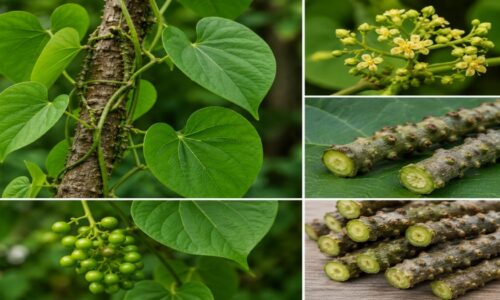
2. Guduchi (Amrita)
Botanical Name: Tinospora cordifolia
A celebrated rejuvenating herb traditionally used to support immunity, vitality, and internal balance.
Key benefits: immune balance • healthy inflammatory responses • vitality • joint comfort
Scientific insights: immunomodulatory activity • anti-inflammatory effects • antioxidant properties • hepatoprotective potential
3. Aragvadha
Botanical Name: Cassia fistula
Traditionally used to support healthy elimination, detoxification, and internal balance.
Key benefits: healthy bowel function • natural detoxification • digestive balance
Scientific insights: antioxidant activity • mild laxative properties • anti-inflammatory potential
The Classical Ingredients – II
4. Devadaru
Botanical Name: Cedrus deodara
Traditionally valued for supporting joints, muscles, movement, and Vata balance.
Key benefits: joint comfort • healthy mobility • muscle health
Scientific insights: anti-inflammatory activity • analgesic potential • antioxidant effects
5. Gokshura
Botanical Name: Tribulus terrestris
Traditionally recognised for musculoskeletal strength and healthy urinary and reproductive function.
Key benefits: musculoskeletal support • overall wellness
Scientific insights: antioxidant properties • anti-inflammatory activity • adaptogenic potential
Ayurvedic properties noted in the source: Rasa—Sweet; Guna—Heavy, Unctuous; Veerya—Cooling; Vipaka—Sweet; Dosha effect—Pacifies Vata and Pitta.
6. Eranda
Botanical Name: Ricinus communis
Traditionally used to support healthy joints and proper Vata balance, particularly where stiffness is present.
Key benefits: joint flexibility • comfortable movement • musculoskeletal health
Scientific insights: anti-inflammatory effects • analgesic activity • traditional use in joint disorders
7. Punarnava
Botanical Name: Boerhavia diffusa
A rejuvenating herb valued for fluid balance, tissue health, and vitality.
Key benefits: healthy fluid balance • tissue nourishment • joint comfort
Scientific insights: anti-inflammatory activity • diuretic effects • antioxidant properties

Preparation: From Herb to Classical Formulation
The preparation combines classical Ayurvedic processing with quality assurance. The source highlights Dravya (quality of ingredients), Samskara (proper processing), and Yukti (scientific application) as fundamental principles.
Stage 1 – Selection & Authentication
- Each herb is checked for correct botanical identity and suitable maturity.
- Natural colour, aroma, texture, and appearance are assessed.
- Materials are checked for mould, insects, moisture damage, contaminants, and internal quality requirements.
Stage 2 – Cleaning & Preliminary Processing
- Dust, soil, stones, and foreign matter are removed.
- Roots, stems, bark, and fruits are cleaned as applicable.
- Raw materials are sorted and graded; damaged or inferior material is eliminated.
Stage 3 – Individual Preparation
- Woody stems are cut into uniform pieces.
- Roots are cleaned and trimmed.
- Hard materials are broken into manageable sizes.
- Dried herbs are inspected and each ingredient is prepared separately.
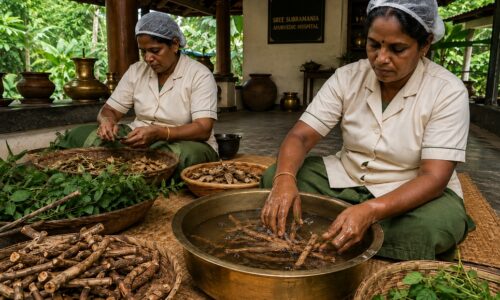
Individual preparation supports uniform extraction and helps maintain the balance intended in the classical formulation
Preparation: Accurate Formulation & Decoction
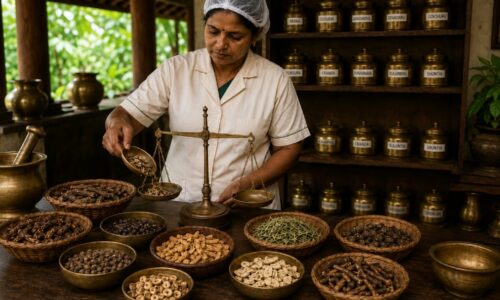
Stage 4 – Accurate Formulation & Measurement
Every ingredient is weighed according to the classical Ayurvedic formulation. Precise proportions help prevent batch-to-batch variation, preserve the synergistic relationship of ingredients, and support reproducible therapeutic quality.
- Maintain precise proportions
- Prevent variation between batches
- Preserve ingredient synergy
- Support consistent formulation quality
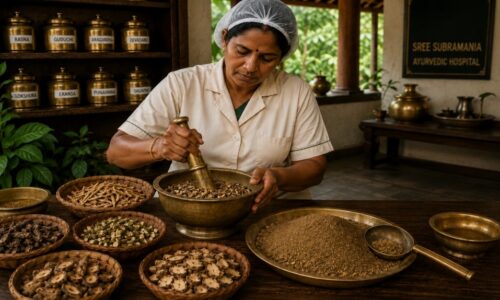
Stage 5 – Preparation of Kwatha Choorna
The prepared herbs are processed into a coarse herbal mixture rather than a fine powder. This facilitates gradual extraction, allows proper water circulation during boiling, improves filtration, and preserves the classical approach.
Stage 6 – Classical Kwatha Kalpana
- The measured mixture is placed in a clean vessel with the prescribed quantity of purified water.
- Slow, uniform heating and gentle simmering are maintained under observation.
- Periodic stirring supports even extraction.
- The decoction is reduced to the prescribed volume with monitoring of temperature and preparation time.
Preparation: Filtration, Evaluation & Storage
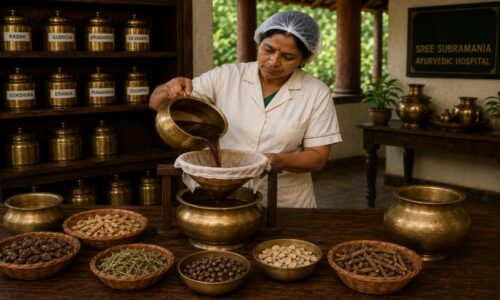
Stage 7 – Filtration of the Decoction
After the desired concentration is reached, the decoction is filtered using clean filtration materials to remove coarse herbal residues, obtain a smooth and uniform liquid, preserve the herbal extract, and prepare the Kashayam for quality evaluation.
Stage 8 – Comprehensive Quality Evaluation
- Characteristic appearance and natural colour
- Traditional aroma and uniform consistency
- Overall batch consistency
- Compliance with internal quality standards
Only batches that meet the required parameters proceed to the next stage.
Stage 9 – Hygienic Filling & Storage
- Transfer into clean, hygienically maintained containers under controlled conditions.
- Protect the formulation from contamination.
- Preserve freshness and therapeutic quality.
- Maintain appropriate storage conditions before dispensing.
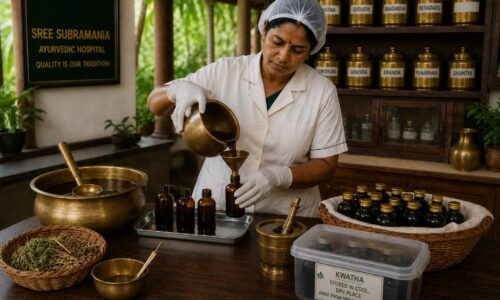
Quality at Every Stage
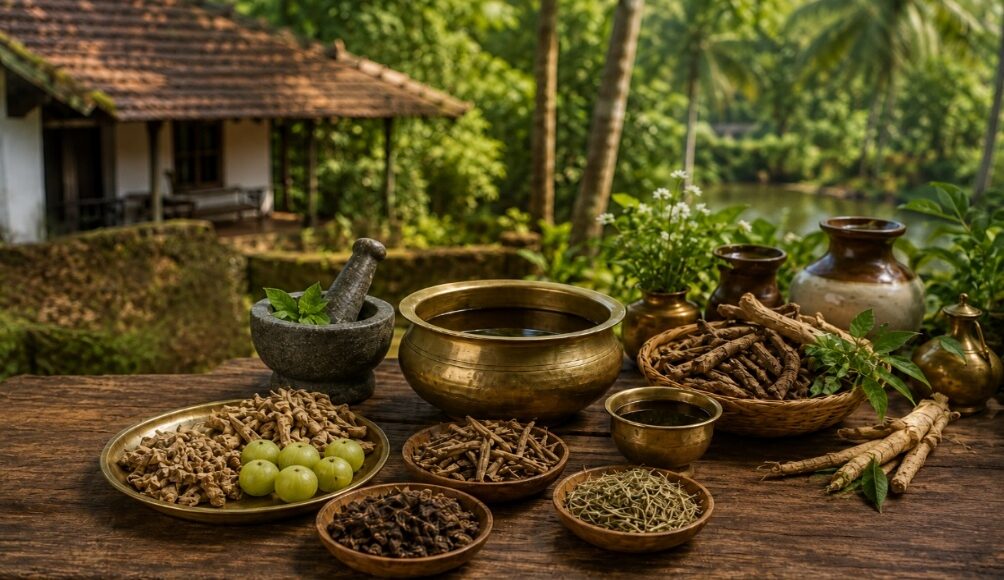
At Sree Subramania Ayurvedic Hospital, the preparation process is presented as a continuous quality pathway from raw-material selection through final storage. Traditional methods are preserved while each stage receives attention to purity, consistency, authenticity, and hygienic handling.
The quality pathway
- Authentic identification of medicinal herbs
- Systematic cleaning, sorting, and grading
- Ingredient-specific preparation
- Accurate formulation and measurement
- Controlled preparation of Kwatha Choorna
- Carefully monitored decoction preparation
- Clean filtration and uniform finished liquid
- Comprehensive batch evaluation
- Hygienic filling and appropriate storage
A tradition preserved through precision
The source describes the final quality of Rasnasaptakam Kashayam as dependent on the care invested at every stage. The hospital’s approach combines authentic Ayurvedic practices with rigorous quality control to produce medicines intended to be safe, consistent, and therapeutically effective.
Modern Scientific Evidence & Therapeutic Significance
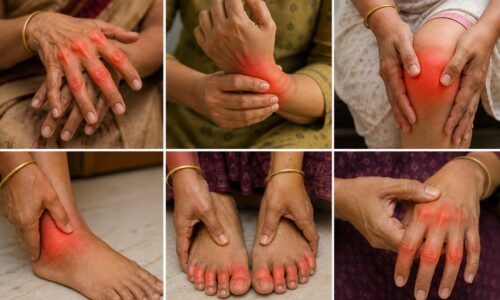
The source notes that contemporary research has begun to explore and support several traditional properties associated with the formulation’s constituent herbs. It also notes that further well-designed clinical trials are required.
Properties highlighted in the source
- Anti-inflammatory activity
- Antioxidant properties
- Analgesic potential
- Support for tissues and musculoskeletal function
- Support for mobility and joint comfort
Musculoskeletal conditions discussed
The source discusses osteoarthritis, cervical spondylosis, lumbar spondylosis, frozen shoulder, chronic musculoskeletal pain, and Rheumatoid Arthritis/Amavata in the broader context of joint and musculoskeletal health.
Ayurvedic interpretation
According to the source, persistent pain, stiffness, restricted movement, and tissue degeneration are understood primarily through Vata aggravation. Rasnasaptakam Kashayam is traditionally used to support Vata balance, joint function, and mobility within a comprehensive Ayurvedic treatment plan.
Key Benefits & Conclusion
Ten areas of support highlighted
- Maintenance of balanced inflammatory responses
- Support for joint comfort and flexibility
- Protection against oxidative stress
- Support for muscles, ligaments, and connective tissues
- Promotion of healthy mobility
- Support for healthy fluid balance
- Support for digestion and metabolism
- Rejuvenation and tissue nourishment
- Comprehensive musculoskeletal support
- Integration of classical Ayurveda with modern care
A classical formulation prepared with care
Rasnasaptakam Kashayam brings together a group of traditionally valued medicinal herbs within the classical Kwatha Kalpana method. In the source, its significance lies not only in the ingredients themselves but also in careful authentication, preparation, measurement, controlled decoction, filtration, quality evaluation, and hygienic storage.
Clinical guidance
Rasnasaptakam Kashayam should be taken under the guidance of a qualified Ayurvedic physician. The choice of medicine, dosage, and duration should be based on the individual’s condition, Prakriti (body constitution), and clinical assessment.
Prepared with classical Ayurvedic principles and quality-focused practices at Sree Subramania Ayurvedic Nursing Home.We are one of the hospitals in Calicut (kerala) that manufacture and use Rasnasaptakam Kashayam as part of our ayurvedic care for Rheumatiod Arthritis.