

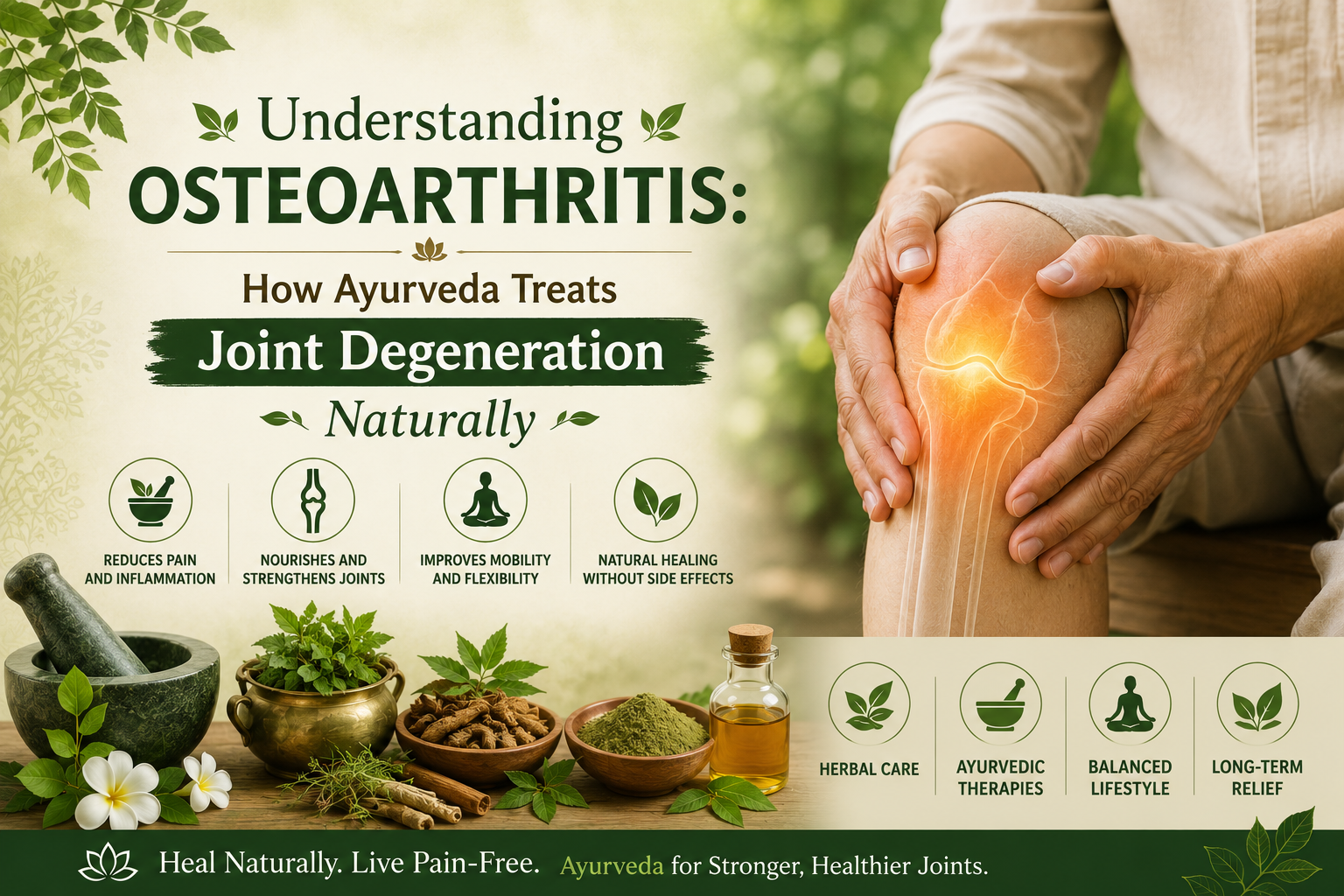
Osteoarthritis (OA) is often dismissed as “normal wear and tear,” but for the millions living with stiff, painful knees and hips, it’s a daily struggle that affects everything from climbing stairs to simply getting out of a chair. In Ayurveda, OA falls under Sandhivata — a Vata-dominant condition where the lubricating fluid in joints (Sleshaka Kapha) diminishes, leading to cartilage degeneration, stiffness, and grinding pain, especially in weight-bearing joints like the knees.
Recognizing the signs
Patients often live with early symptoms for years before seeking treatment, assuming the discomfort is simply part of aging. The signs worth paying attention to include:
- Morning stiffness that eases with movement
- A grinding or cracking sensation in the joint
- Pain that worsens with activity and improves with rest
- Gradual reduction in joint flexibility, sometimes noticed first in simple tasks like sitting cross-legged or climbing stairs
How treatment is structured
Ayurvedic management focuses on three goals: reducing Vata aggravation, lubricating the joint, and strengthening surrounding muscle support. None of these goals is addressed in isolation, since a joint that is lubricated but still surrounded by weak muscles will continue to degenerate.
Localized oil-pooling therapy over the affected joint, sometimes adapted using the Kativasthi technique, deeply nourishes cartilage and reduces inflammation by keeping warm medicated oil in contact with the joint for an extended period.
Kizhi (herbal bolus massage) — improves circulation and eases stiffness through warm herbal poultices applied rhythmically over the joint and surrounding muscles.
Snehapanam — internal oleation that supports joint lubrication from within, working alongside the external therapies rather than replacing them.
- Anti-Vata herbal formulations to reduce inflammatory pain and support the tissue layers involved in joint health
- Guided movement therapy to maintain joint mobility without overloading damaged cartilage, introduced gradually as pain reduces
Who this approach suits
Unlike surgical options, Ayurvedic treatment aims to slow progression and manage symptoms without invasive intervention, making it suitable for early-to-moderate OA or for patients wishing to delay joint replacement for as long as possible. It is also often used by patients who have already had surgery on one joint and want to manage a second joint more conservatively. Full details are on our Osteoarthritis Treatment page. Treatment duration is tailored to the joint involved and severity, with regular physician review throughout the in-patient stay to adjust the protocol as mobility improves.
Living with OA day to day
Alongside in-patient treatment, small daily habits make a meaningful difference: avoiding prolonged sitting in one position, using supportive footwear, and keeping the affected joint gently active rather than completely resting it. Diet also plays a supporting role, since Vata-aggravating foods — cold, dry, and raw items eaten in excess — can make stiffness worse, especially in colder or damp weather. Patients are typically given a home-care plan covering diet, gentle exercise, and self-massage techniques to maintain the gains made during their in-patient stay, since osteoarthritis management is an ongoing relationship rather than a one-time fix.
How this compares to conventional management
Many patients arrive at SSANH after trying anti-inflammatory medication or physiotherapy with limited lasting relief, or after being told that joint replacement is the only remaining option. Ayurvedic treatment is not positioned as a replacement for necessary surgery when a joint is severely degenerated, but for early-to-moderate cases, it offers a way to address the underlying Vata imbalance rather than only managing pain symptomatically. Some patients use Ayurvedic care to delay surgery by months or years; others use it as a complementary approach alongside conventional physiotherapy.
Myths that keep patients from seeking treatment early
A few misconceptions tend to delay care unnecessarily. Some patients assume oil-pooling therapy will be uncomfortable, when in practice most find it deeply relaxing, since the oil is kept at a steady warm temperature and the goal is sustained nourishment rather than deep tissue manipulation — some initial tenderness around a very inflamed joint is normal and typically eases within the first few sessions. Others assume both knees can’t be treated together if both are affected, when bilateral treatment is in fact common and simply factored into the program schedule from the start. And diet is often dismissed as irrelevant to a joint condition, when in reality dry, cold, and raw foods can measurably worsen Vata-type joint pain, which is why physicians build specific dietary guidance into the protocol rather than treating it as an afterthought.
Living well with osteoarthritis is often less about eliminating pain entirely and more about restoring enough mobility and comfort to return to daily activities with confidence, which is the outcome most patients are ultimately looking for.
