

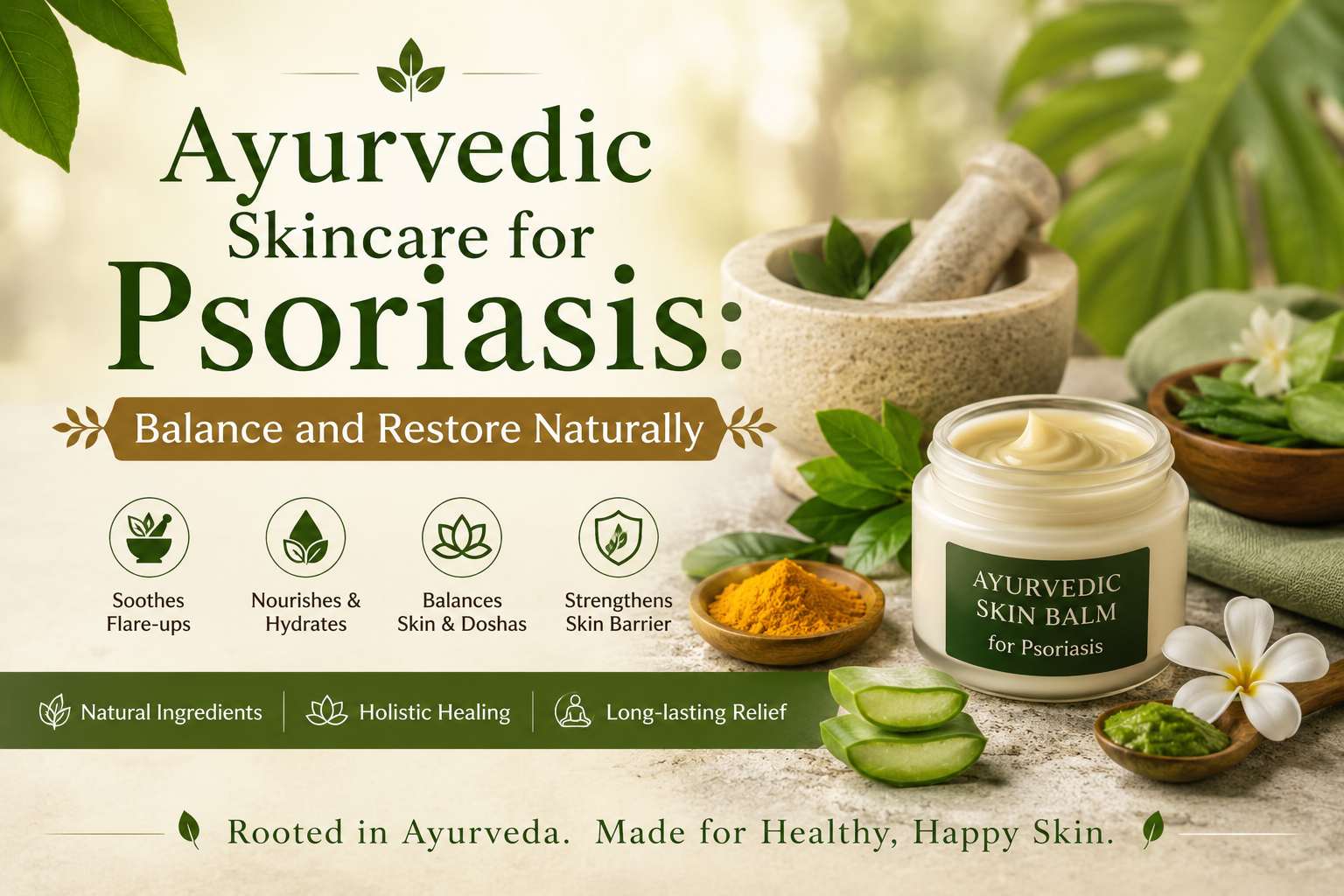
Psoriasis is a chronic skin condition that goes far beyond surface-level irritation. Characterized by red, scaly patches, itching, and inflammation, it can affect both physical comfort and emotional well-being. While conventional treatments often focus on suppressing symptoms, Ayurveda offers a deeper, more holistic path—one that aims to restore internal balance and support long-term skin health naturally.
Understanding Psoriasis Through Ayurveda
In modern medicine, psoriasis is considered an autoimmune disorder where skin cells multiply too quickly. In Ayurveda, it is often linked to conditions like Kitibha or Eka Kushtha, caused by imbalances in the Vata and Kapha doshas, along with toxin accumulation (Ama) in the body.
Key contributing factors include:
- Poor digestion and weak metabolism (Agni)
- Accumulation of toxins (Ama)
- Improper diet and lifestyle
- Stress and emotional imbalance
Ayurveda treats psoriasis not just as a skin issue, but as a systemic imbalance requiring internal and external healing.
The Ayurvedic Approach to Healing
Ayurvedic skincare focuses on three main goals:
- Detoxification – eliminating toxins from the body
- Balancing Doshas – restoring internal harmony
- Rejuvenation – nourishing the skin and tissues
This approach ensures that healing is not temporary but sustainable.
Key Ayurvedic Treatments for Psoriasis
- Panchakarma (Detox Therapy)
A cornerstone of Ayurvedic healing, Panchakarma helps cleanse the body deeply. For psoriasis, therapies like:
- Virechana (purgation therapy)
- Raktamokshana (blood purification)
are often recommended to remove toxins and purify the blood.
- Abhyanga (Medicated Oil Massage)
Using herbal oils such as neem or coconut-based formulations, Abhyanga:
- Hydrates dry, scaly skin
- Reduces inflammation
- Improves blood circulation
- Takradhara
A soothing therapy where medicated buttermilk is poured over the forehead or affected areas. It helps:
- Calm the nervous system
- Reduce stress-related flare-ups
- Improve skin texture
- Lepam (Herbal Pastes)
Topical applications made from herbs like turmeric, sandalwood, and neem are applied to affected areas to:
- Reduce itching and redness
- Promote healing
- Detoxify the skin
- Internal Herbal Medications
Ayurvedic herbs play a crucial role in managing psoriasis:
- Neem – purifies blood and fights infection
- Turmeric – reduces inflammation
- Guduchi – boosts immunity
- Manjistha – supports skin health
These are prescribed based on individual body constitution.
Diet for Psoriasis Management
Diet is central to Ayurvedic healing. A well-balanced diet can significantly reduce flare-ups.
✅ Recommended Foods
- Warm, freshly cooked meals
- Bitter vegetables (neem leaves, bitter gourd)
- Fruits like pomegranate and apple
- Herbal teas
❌ Foods to Avoid
- Dairy products (especially in excess)
- Processed and fried foods
- Sugary and fermented items
- Seafood combined with dairy (considered incompatible in Ayurveda)
Maintaining strong digestion (Agni) is essential for preventing toxin buildup.
Lifestyle Practices for Healthy Skin
Ayurveda emphasizes daily habits that support healing:
- Stress Management – meditation, breathing exercises
- Regular Sleep – maintaining a healthy sleep cycle
- Yoga – improves circulation and reduces inflammation
- Daily Detox Practices – such as drinking warm water
Stress is a major trigger for psoriasis, so calming the mind is as important as treating the body.
Benefits of Ayurvedic Skincare for Psoriasis
Choosing Ayurveda for psoriasis offers several long-term advantages:
- ✅ Addresses the root cause, not just symptoms
- ✅ Reduces recurrence of flare-ups
- ✅ Improves overall skin health
- ✅ Enhances immunity naturally
- ✅ Minimizes side effects
With consistent treatment, many individuals experience smoother skin, reduced itching, and improved confidence.
When to Seek Professional Care
While home remedies can help, psoriasis often requires expert guidance. Reputable centers—such as those listed on Ayurvedic Hospital Kerala—offer personalized treatment plans combining detox therapies, herbal medicine, and dietary guidance tailored to each patient.
Professional supervision ensures safe and effective healing, especially for moderate to severe cases.
Important Considerations
- Ayurvedic treatment takes time—patience is key
- Avoid self-medication without expert advice
- Follow diet and lifestyle recommendations strictly
- Consistency is crucial for lasting results
Ayurveda as a Path to Skin Wellness
Ayurveda teaches that healthy skin reflects internal balance. By addressing digestion, detoxification, and mental well-being, it creates a foundation for radiant, healthy skin.
Rather than masking symptoms, Ayurvedic skincare for psoriasis works to restore harmony within the body, leading to natural and lasting healing.
