

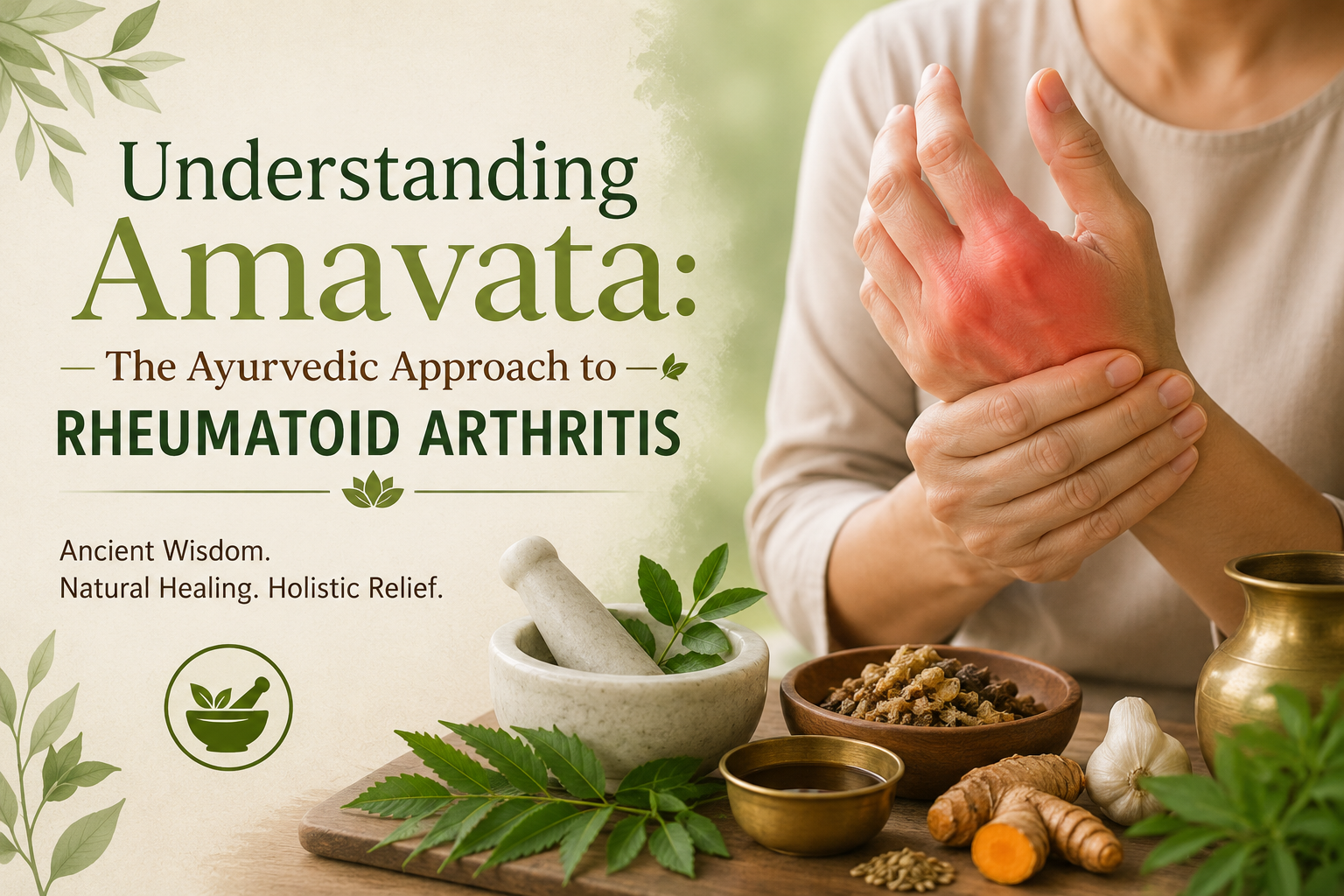
Morning stiffness that takes hours to ease. Joints that swell, ache and feel warm to the touch. For anyone living with rheumatoid arthritis, these are familiar companions. Ayurveda has studied this pattern for centuries and names it Amavata, a condition that sits at the meeting point of poor digestion and aggravated Vata.
What does Amavata mean?
The word itself tells the story. Ama refers to the sticky, undigested residue that builds up when the digestive fire, or Agni, grows weak. Vata is the bodily energy that governs movement. When Ama travels through the body and lodges in the joints, and Vata carries it there, the result is the swelling, pain and stiffness that define Amavata. This is why classical texts treat rheumatoid arthritis as far more than a joint problem. The joints are where the trouble shows itself, but the source lies in the gut.
Why the digestive connection matters
Modern patients are often surprised to hear their joint pain linked to digestion. Yet anyone with rheumatoid arthritis who has noticed a flare after a heavy, oily or poorly combined meal already has a sense of it. Irregular eating, cold and heavy foods, eating before the previous meal has digested, and a sedentary routine all weaken Agni. Once that happens, Ama accumulates and the cycle begins.
How Ayurveda treats it
Treatment is staged rather than rushed. The first priority is to rekindle digestion and clear the accumulated Ama, using light foods, warm water and herbs that strengthen Agni. This phase is known as Deepana and Pachana. Only once the body is lighter do detoxifying procedures such as Virechana (therapeutic purgation) and medicated Basti (enema therapy) come into play, since Basti is considered the foremost treatment for Vata disorders.
Alongside these, formulations built around Guggulu are widely used to reduce inflammation and support the joints, supported by herbs traditionally valued for joint health. Gentle external therapies, dietary discipline and graded movement complete the picture. The aim throughout is not simply to silence pain but to break the underlying cycle so flares become less frequent and less severe.
Living alongside the condition
Small daily habits carry real weight here. Eating warm, freshly cooked meals at regular times, sipping warm water through the day, staying gently active and keeping the joints moving without overstraining them all help keep Ama in check. Rheumatoid arthritis is a long-term condition, and Ayurveda treats it as a relationship to be managed rather than a switch to be flipped.
Book a consultation. To consult our physicians about rheumatoid arthritis or persistent joint pain, call Sree Subramania Ayurvedic Nursing Home on +91 7594003003 or +91 70340 61009, or visit us in Calicut, Kerala.
