

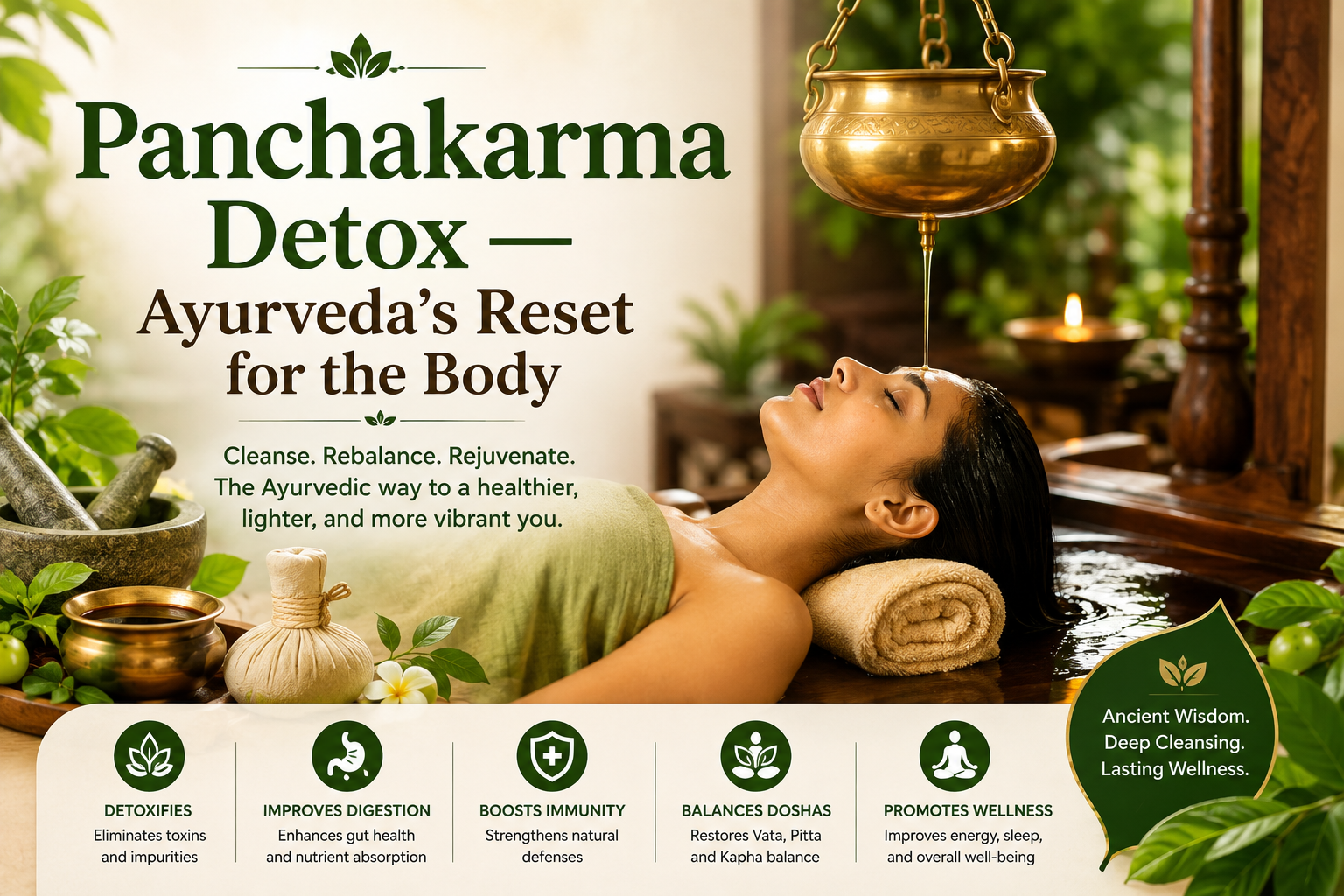
Panchakarma Detox: Ayurveda’s Full-Body Reset
You’ve probably heard the word “Panchakarma” thrown around in wellness circles — often next to words like “detox retreat” or “cleanse.” But in classical Ayurveda, Panchakarma detox is not a spa trend. It’s a structured, physician-supervised medical protocol that has been used for thousands of years to clear the body of accumulated toxins and restore balance at a deep, cellular level.
If you’ve been dealing with unexplained fatigue, recurring joint pain, skin flare-ups, or a general sense that your body just isn’t resetting the way it used to, this guide will walk you through what Panchakarma actually involves, who it helps, and what to expect from an in-patient program.
What Is Panchakarma, Really?
Panchakarma literally means “five actions” — five classical cleansing therapies designed to remove ama (accumulated toxins) from the body’s tissues and channels. In Ayurveda, most chronic conditions — from joint stiffness to skin disorders to poor digestion — are traced back to this toxin buildup, often caused by poor diet, stress, irregular sleep, or a sluggish metabolism.
Unlike a juice cleanse or a weekend detox, Panchakarma works from the inside out. It’s preceded by preparatory therapies that loosen toxins from deep tissues, followed by the main cleansing procedures, and finished with a structured recovery diet — because how you come out of a detox matters just as much as the detox itself.
The Preparatory Phase: Purvakarma
Before any deep cleansing begins, the body needs to be prepared. This involves two key steps:
- Snehana (oleation): Warm medicated oils are applied externally and, in some cases, taken internally to soften tissues and loosen deep-seated toxins.
- Swedana (sudation): Herbal steam therapy that opens the body’s channels, making it easier for loosened toxins to be eliminated.
This stage alone often brings noticeable relief in stiffness and circulation, even before the main cleansing therapies begin.
Core Cleansing Therapies
Depending on your constitution and health concern, your physician may prescribe one or more of the five classical actions — therapeutic emesis, purgation, medicated enemas, nasal administration of herbal oils, or bloodletting. Each targets a different set of tissues and is chosen only after a detailed consultation, never as a one-size-fits-all protocol.
How Panchakarma Supports Other Ayurvedic Treatments
One thing many first-time patients don’t realise: Panchakarma is often the foundation for other therapies, not a standalone treatment. For example, patients undergoing care for chronic joint and spine conditions typically begin with Panchakarma so that the tissues are properly prepared to absorb the herbal oils used in later stages of treatment. You can read more about how this fits into a broader recovery plan on our page covering the Back Pain Treatment programme, where Panchakarma is used as the opening phase before targeted spinal therapies begin.
Similarly, patients coming in for rheumatic or joint conditions often start with a Panchakarma-based cleanse before moving into more specific therapies designed for Rheumatoid Arthritis.
What an In-Patient Panchakarma Programme Looks Like
Because Panchakarma is a gradual, sequenced process, it’s almost always done as an in-patient programme, typically ranging from 7 to 21 days depending on your health goals and current condition. During your stay, you can expect:
- Twice-daily physician consultations to monitor your response and adjust the protocol
- A structured diet designed to support each phase of the cleanse
- Daily therapy sessions in dedicated treatment rooms
- Round-the-clock physician availability for any concerns
Our full range of on-site amenities — from treatment rooms to recovery-friendly meals — is detailed on our Facilities page, so you know exactly what to expect before you arrive.
Is Panchakarma Right for You?
Panchakarma tends to help most with chronic, lifestyle-related conditions — persistent fatigue, joint stiffness, skin issues, digestive sluggishness, and stress-related imbalances. It’s also frequently used as a preventive, seasonal reset for people who are otherwise healthy but want to maintain long-term wellness. That said, the right protocol varies significantly from person to person, which is why an initial consultation with an ayurvedic physician is essential before beginning.
Many patients also choose to combine their Panchakarma programme with a stay at our Rasa Gurukul Resort location in Chalakkudi, Thrissur, for a more retreat-style experience alongside classical treatment.
Start Your Reset
Whether you’re dealing with a specific health concern or simply want to give your body the reset it’s been asking for, our physicians can help you understand whether a Panchakarma detox programme is right for you. Book a consultation today and take the first step toward genuine, lasting wellness.
